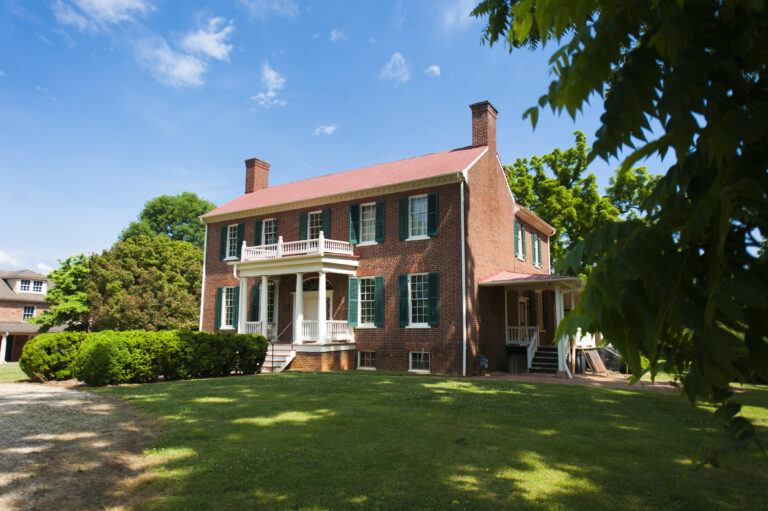
The University of Lynchburg held its 2026 Undergraduate Commencement ceremony on Thursday, May 7, at 11 a.m. The ceremony took place on Shellenberger Field. This year, 345 undergraduate degrees — 161 Bachelor of Arts and 184 Bachelor of Science — were conferred.
In the week leading up to Commencement, the University held various events to honor students and award them with hoods, cords, and stoles for their Commencement regalia:
- The Lavender Ceremony, a cording ceremony for students who identify as LGBTQIA+, was held on Tuesday in the West Room.
- Westover Honors held its reception in Sydnor Performance Hall on Wednesday morning.
- The Bonner Leader Program’s graduation was held at noon on Wednesday.
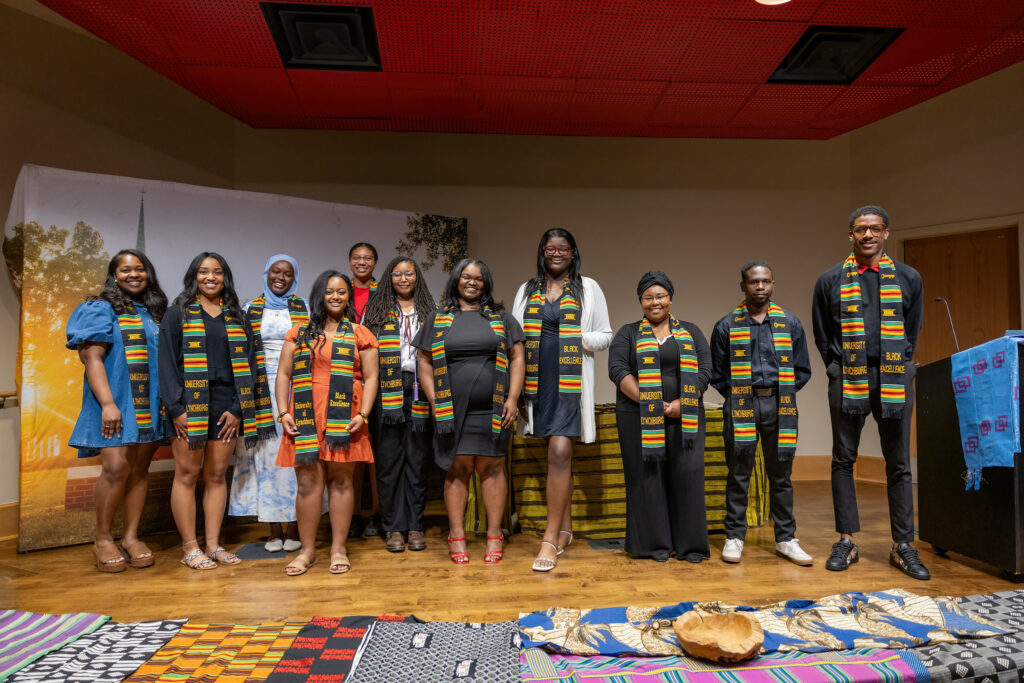
Another event was the “Donning of the Kente,” held on Tuesday, May 5, in Hall Campus Center’s Memorial Ballroom. The Donning of the Kente is a ceremony where students of African and African American descent are given a stole bearing a traditional Ghanaian pattern.
“Kente cloth has long symbolized pride, history, and identity,” said guest speaker and Lynchburg City Schools counselor Nicole Chalmers ’02. “Originating … from the Ashanti people of Ghana, each color and pattern tells a story.”
“ … Every thread represents generations of those who dreamed of opportunities they were never given. Generations who believed that if they kept pushing forward, someone in their family would one day sit in classrooms like the ones we have sat in.”
On the morning of Commencement, rain fell intermittently. Guests walked onto the field wearing ponchos and carrying umbrellas while orchestral music played on the loudspeaker. At 11 a.m., the Victory Bell rang, announcing the beginning of the ceremony.
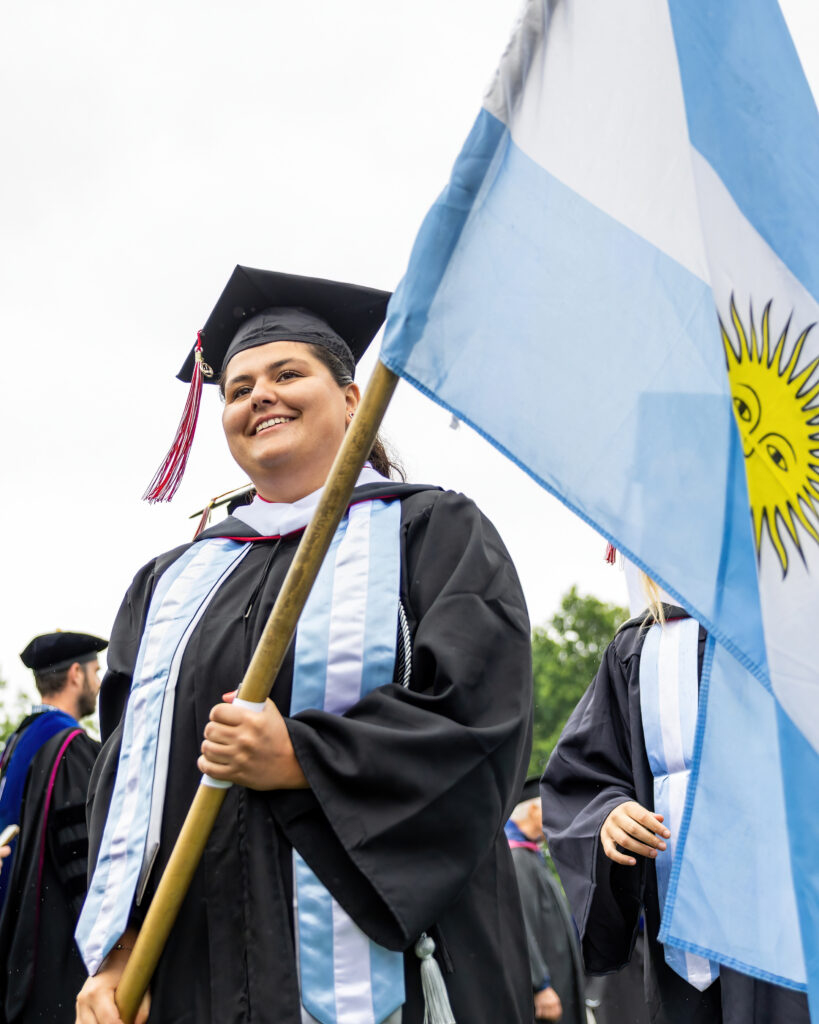
The sky briefly cleared as the procession began. At the head of the group were the University’s international students, bearing the flags of their nations. 2026 marked the largest graduating class of international students in the University’s history, with students from 15 different countries represented.
One such international student was Soliyana Atnafu ’26. The SGA president from Ethiopia delivered a speech thanking her family, her University mentors, and God for her success at Lynchburg.
“Looking at all of you right now is surreal,” Atnafu said, “especially when I think back to that first semester. I came to Lynchburg from Ethiopia, not knowing a single soul, with English as my second language. I was terrified.”
Atnafu said that, despite times of wanting to give up and “run back to my comfort zone,” she persevered.
“I know for a fact that I didn’t do this on my own; [God] was the one holding me up when I felt like I couldn’t do it anymore. …
“To my mom and dad: You are my biggest supporters. Any strength you see in me right now? I got it from you.”
Atnafu said she was able to “find a new family here on campus” and “a circle that made me believe in friendship again.”
She thanked her professors for pushing her to find her voice and giving her the confidence to serve as SGA president and on the presidential search committee, finding the next University president.
“I came here as a girl who was afraid to speak, and I leave here having had the privilege to help shape the future of this school and speak for all of you.”
Next, University President Dr. Alison Morrison-Shetlar went to the podium.
“In Scotland, we call this ‘liquid sunshine,’” she joked, referring to the rainy weather of her homeland.
Morrison-Shetlar, who will retire this year, congratulated the graduates and said, “You are, without question, awesome. And it has been the honor of my life to be your president.
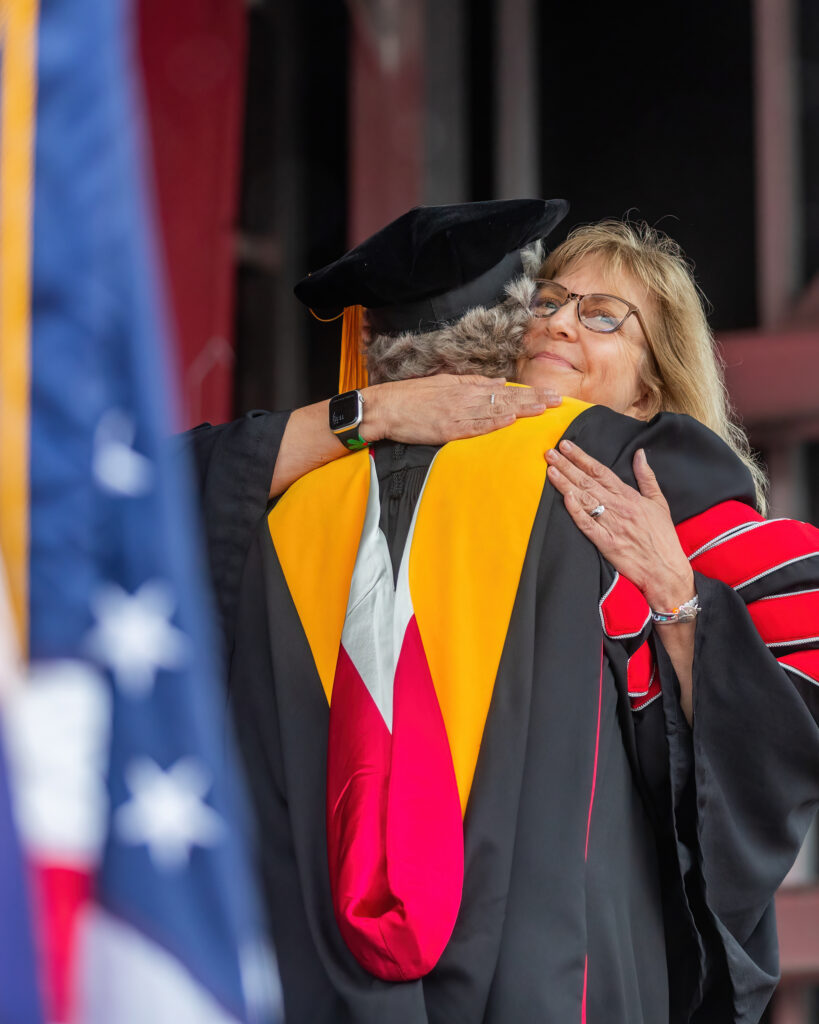
“Today is my last Undergraduate Commencement as your president. After six years at the helm of this incredible institution, I am stepping into my own next chapter, right alongside you. We are both walking off a stage we know well and stepping into a future that isn’t entirely written yet.”
Morrison-Shetlar told the graduates she wanted to share some of the lessons she had learned “not just as your president, but as a human being who’s spent a lifetime navigating a world that rarely goes according to plan.”
One of the lessons was “You can transform anything, if you have the courage to face change.”
She recalled the events and challenges the students had lived through in the past few years — the aftermath of a pandemic, global economic uncertainty, and a rapidly changing world. But the people who transform the world are those who “looked at an uncertain moment and said, ‘I will figure this out.’
“You have been learning to do exactly that. … You were never just memorizing facts. You were learning how to think, to ask better questions and sit with a problem until it gives way. You’ve been learning to collaborate with people who see the world differently than you do.
“That, dear graduates, is what makes your degree from the University of Lynchburg something more than a credential. It is a tool kit. It has equipped you for a world that will ask you to change direction, sometimes without much warning. And you are ready.”
The president also encouraged them to “carry your values like armor,” and said the world needs them.
“It needs your authenticity, in a world that is becoming increasingly synthetic. It needs your human judgment, in a world that is increasingly automated. It needs your courage, in a world that sometimes feels short on it. You are not walking out of here underprepared.”
Morrison-Shetlar said the University was the graduates’ “home for life,” and they should “Come back. Bring your stories. Bring your successes — and yes, bring your failures, too, because we want to hear all of it.”
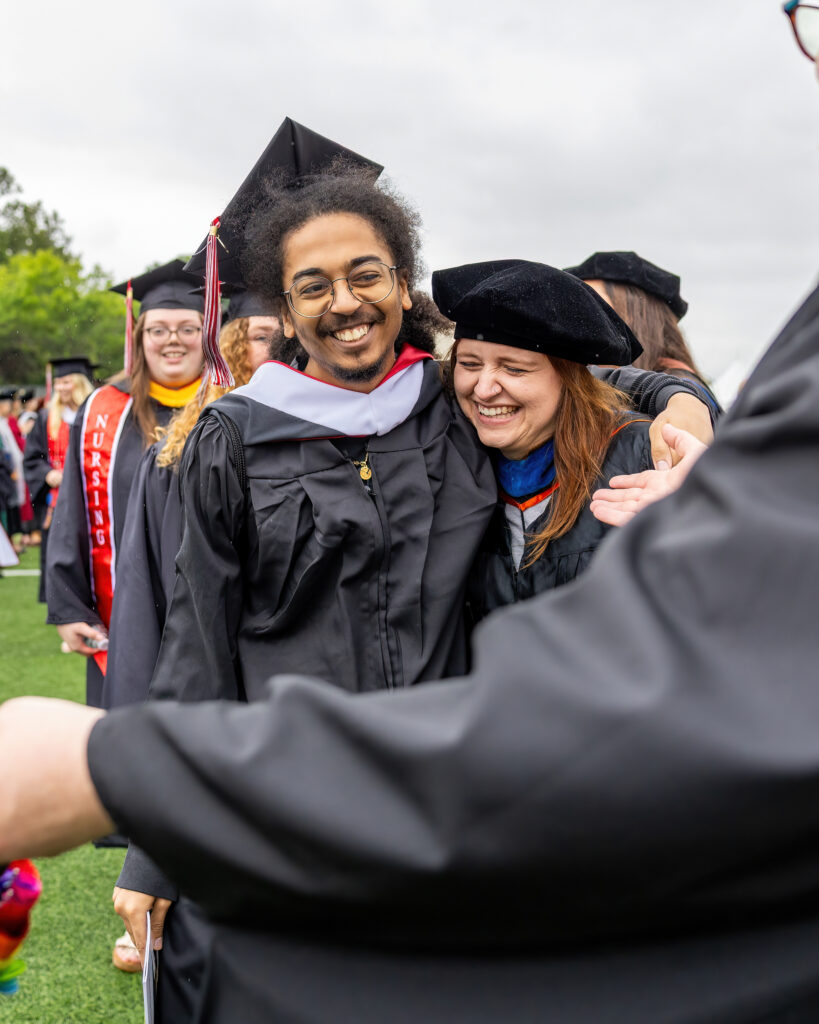
After making her remarks, Morrison-Shetlar welcomed the Commencement speaker, John Garrison Marks ’10, to the stage.
Marks is a historian, writer, and nationally recognized leader in the history and museum fields. At Lynchburg, he was a double major in history and Spanish, with a minor in museum studies. He was also a Westover Honors Fellow and cum laude graduate.
He has published in The Washington Post, Time magazine, Smithsonian magazine, and for the last few years he has worked for the American Association of State and Local History. His latest book, “Thy Will Be Done: George Washington’s Legacy of Slavery and the Fight for American Memory” explores how Americans have defined Washington’s legacy over the years.
In his speech, Marks said smart phone technology and artificial intelligence pose “a genuine crisis” in terms of “our ability to think and focus.
“Day after day, we voluntarily hand over our brains and attention to the world’s largest corporations, steadily diminishing our intellectual capacity while we enrich the world’s wealthiest — and most antidemocratic — men. In the process, we’re destroying … the things that make us most human.”
To illustrate his point, Marks talked about the experiences of a young Frederick Douglass, the famous American statesman and abolitionist who escaped from slavery in 1838.
“He was about 12 when, in secret, the wife of his enslaver taught him to read,” Marks said. “Douglass describes this moment as ‘earth shattering.’ He suddenly knew the power words could provide.
“All at once they liberated his mind, while also making clearer than ever the deep injustice of his enslavement, allowing him to see just how much he was being deprived of. Soon after, when his enslavers forbid him from continuing to learn, Douglass traded with kids in the street and men on the docks to get access to whatever reading material he could. …
“Reading led Douglass to emancipate himself, escaping from slavery and becoming one of the most powerful voices to ever speak out against injustice that this nation has ever known. Douglass later said that ‘knowledge is the pathway from slavery to freedom.’ …
“Reading can be just as valuable to all of us today. So as you think about your own life and your own voice — and how you’ll use it in the years ahead, wherever they bring you — I’ll give you the advice my dad once gave me, which has proven to be the single most important piece of advice I’ve ever received. And that is this: just read, read, read.”
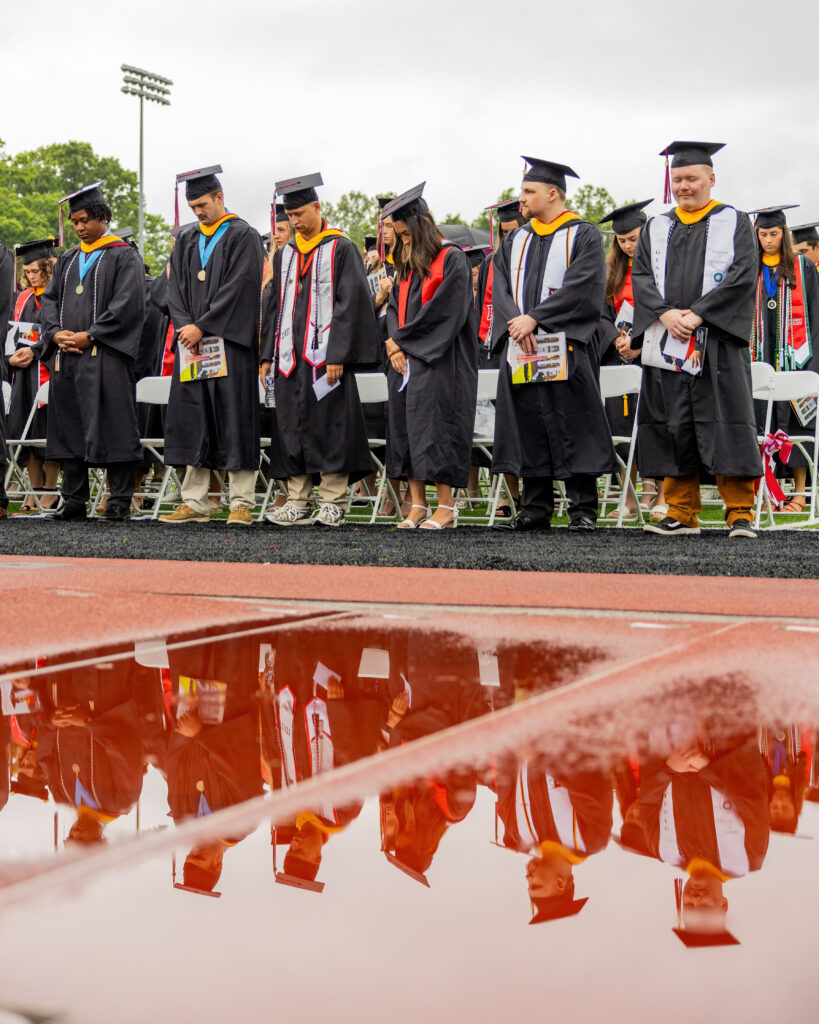
At the close of the ceremony, the Rev. Dr. Nathan Albert, University chaplain and assistant vice president for belonging, gave the benediction.
“May you find the strength to stand tall, to square your shoulders, to live without reservation, to do hard things, to be a channel of peace and a driver of change in a chaotic world,” he said.
“Pursuing justice, dismantling systems that thrive on harm, shattering barriers of oppression … May you fiercely strive, with every fiber of your being, for the liberation, the freedom, the dignity, and the collective empowerment of all people, so this world, so in need of peace and love, might be one step closer to wholeness because you existed in it.”
Morrison-Shetlar led the recessional while James Robertson ’88, ’90 MEd, the University’s “official bagpiper,” played “Scotland the Brave” to honor the legacy of Lynchburg’s first foreign-born president.
Eddie Read, father of Jahia Read ’26, attended Commencement and said the experience of seeing his daughter graduate was “amazing.”
“It’s just a wonderful day to be involved in a program like this with such positivity,” he said, adding. “To feel the energy on this campus and see so many different people here — it’s just wonderful.”