A ribbon-cutting ceremony was held on April 16, celebrating the completion of the College Lake Dam Removal and Stream Restoration Project and the dedication of what is now called the Blackwater Wetlands.
Hosted by the City of Lynchburg’s Water Resources Department, it was attended by members of the University of Lynchburg community, city and state representatives, project contractors, and the general public.
The ceremony marked the completion of a yearslong project that began on August 2, 2018, when College Lake overflowed its dam during a torrential rain. For two days, area residents feared the earthen structure would burst, but a city inspection showed there was no immediate risk of the dam breaking.
What had become clear to all parties, however, was that it was time for something to be done. Because the lake was owned by the University and the dam was city property, a partnership between the two parties naturally formed. The goal: to create a sustainable alternative for the dam and the lake it created when it was built in 1934.
Dr. Laura Henry-Stone, professor of environmental sciences and sustainability at Lynchburg, was involved with the project from the start. Since joining the faculty in 2012, she had advocated for the area to be turned into a wetland ecosystem, and the same month the lake overflowed, former University president Dr. Ken Garren asked her to be his liaison with the city.
Throughout the project, Henry-Stone met with University stakeholders and city water department employees on a regular basis. It was eventually decided that the dam should be removed.
Private engineering group AECOM was contracted to do the design work. In addition to the city, there were a host of other stakeholders and contractors, including Virginia’s Departments of Environmental Quality and Conservation and Recreation, English Construction, and others.
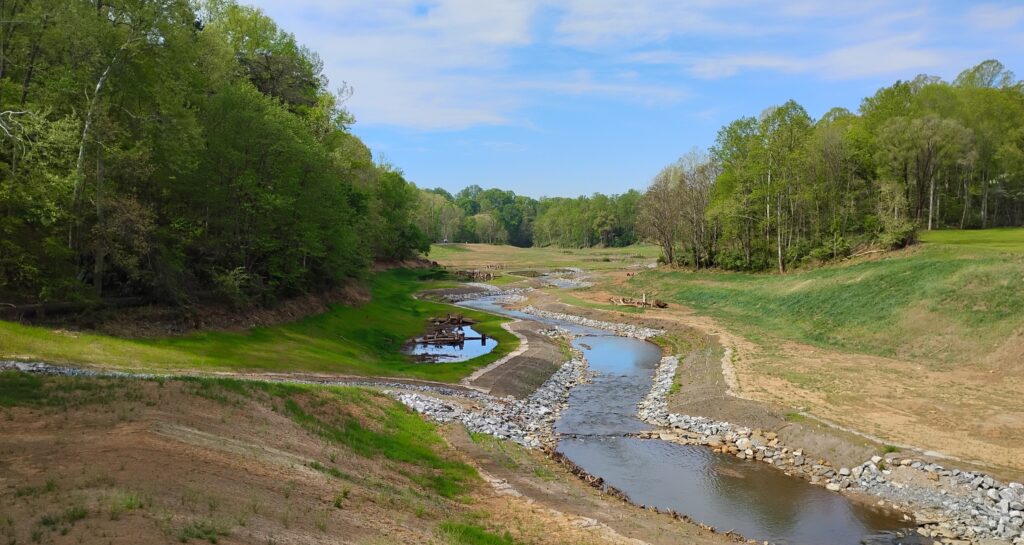
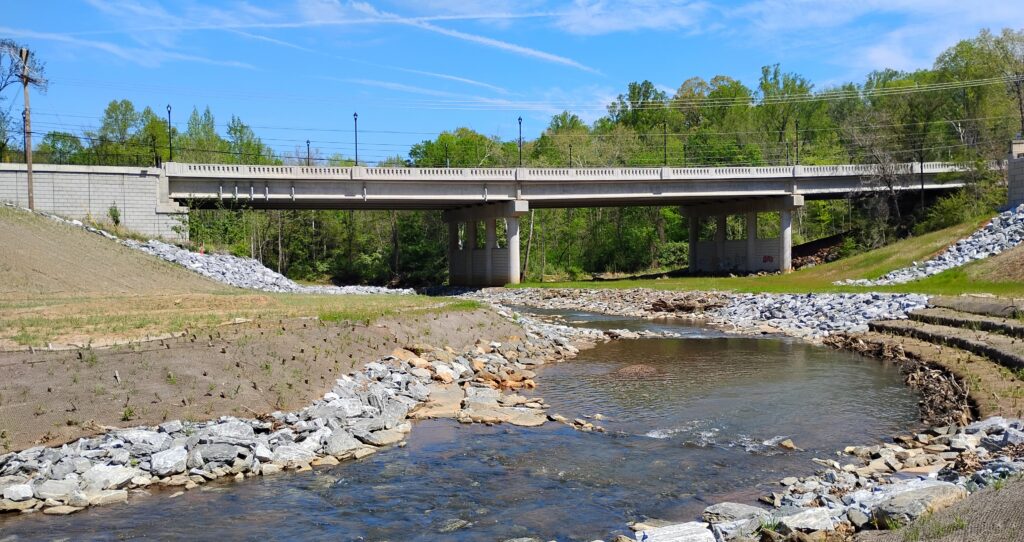
Over the next several years, a new bridge paralleling the old bridge on Lakeside Drive/Route 221 was built, and then the dam was deconstructed. After that, contractors worked to restore Blackwater Creek and establish the wetlands.
There is still work to do, Henry-Stone said. A section of Creekside Trail still needs to be restored, for example, and she envisions boardwalks and trails that will provide access to the wetlands and lakebed.
With help from Lynchburg’s Office of Advancement, Henry-Stone will seek funding for what she describes as “research infrastructure, both at Claytor Nature Center and here — what we’re calling the Blackwater Wetlands.
“In 2018, when I was on the team that envisioned plans for the future for this space. What we always envisioned was that this would be a wetlands learning laboratory with boardwalks and viewing platforms and potentially a reworking of the old Beaver Point cabin.
“The idea is that we’ll provide access through Beaver Point as a hub, with boardwalks and viewing platforms, so the community and the University can take advantage of that space.
“It’s University property, so there are some public-private partnerships to work out, in terms of access. Certainly, my vision would be [to] connect it with Lynchburg’s excellent city park system in some way, through maybe a formal partnership.
“At the very least, it will provide access to the University community and especially other educational institutions that want to use it for education and research.”
Erika Mork, Lynchburg’s director of institutional giving, is working with Henry-Stone to secure additional grant funding. She envisions attracting wetlands and creek researchers to what would amount to a “biological field station that would encompass both Claytor and here.”