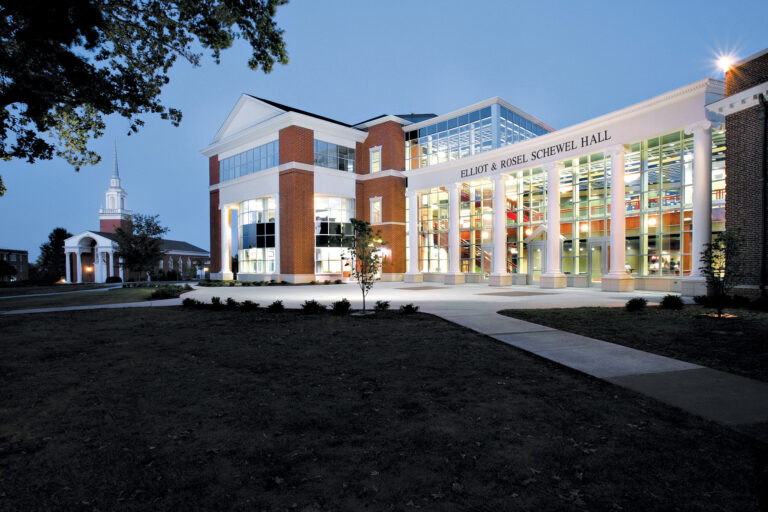
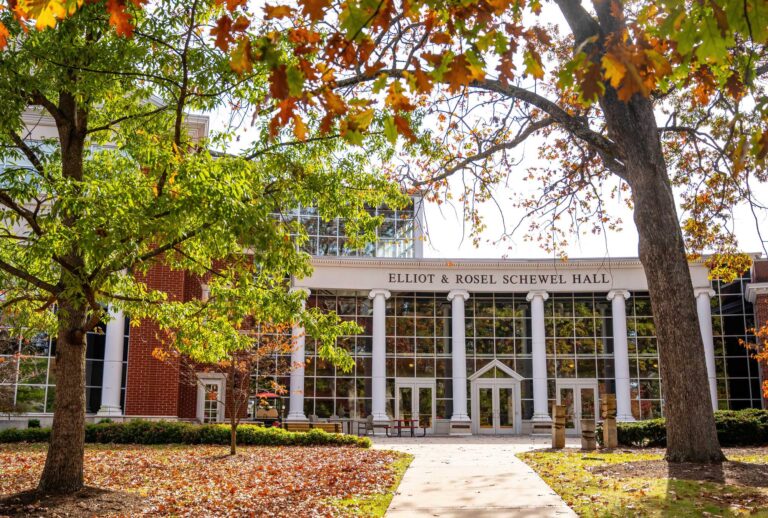
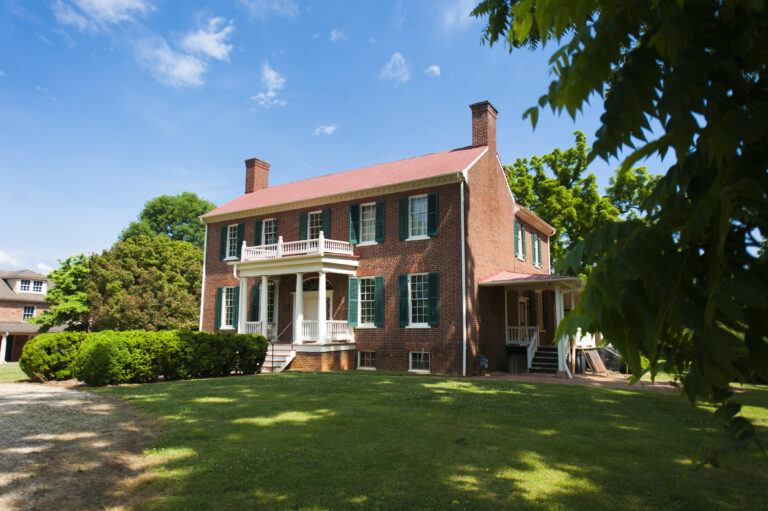
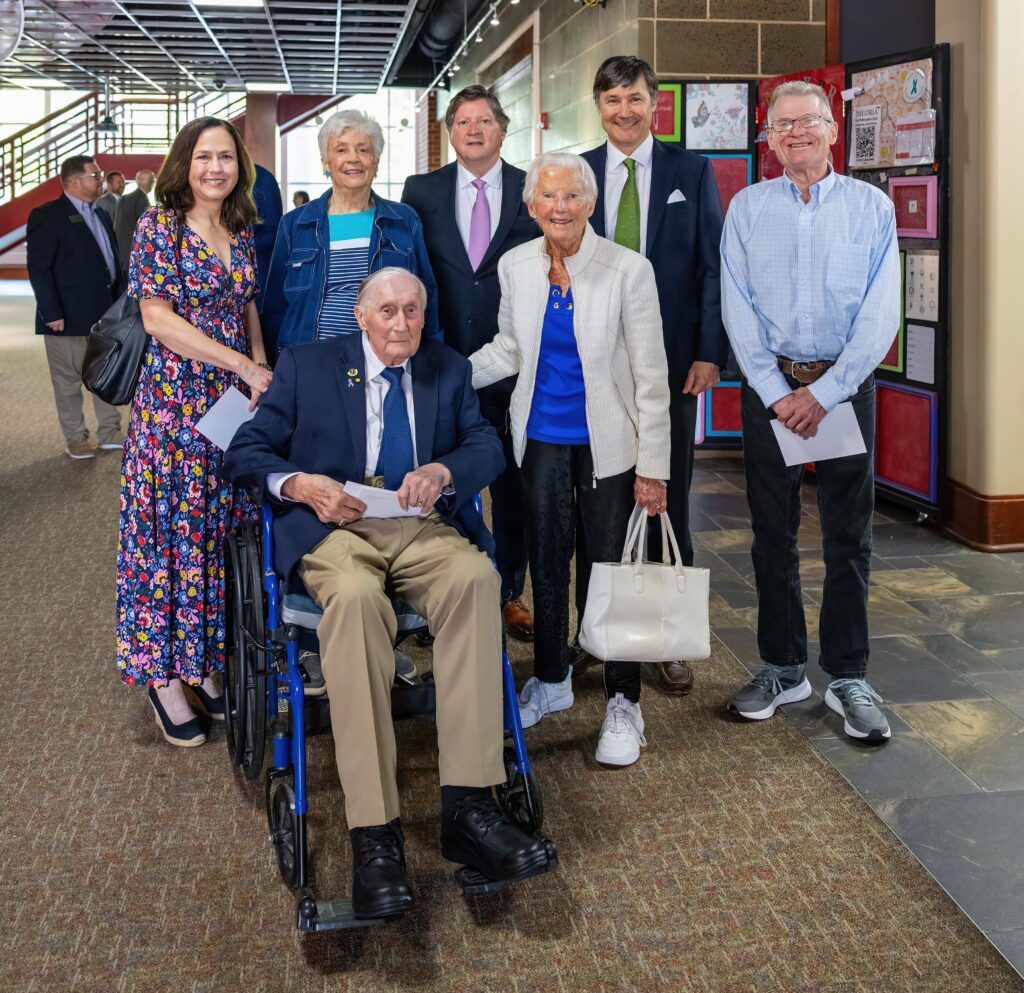
During a ceremony at Schewel Hall on Saturday, April 18, two of the University of Lynchburg’s academic centers were renamed to honor men who, as University President Dr. Alison Morrison-Shetlar described it, “helped make the University of Lynchburg what it is and what it is still becoming.”
The University Research Center, located at 516 Brevard Street, was renamed for Dr. Percy Wootton ’53, ’98 DSc, a Lynchburg College alumnus, longtime member of Lynchburg College’s board of trustees, and the center’s primary benefactor.
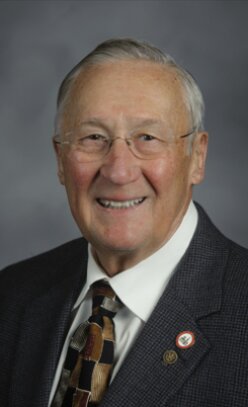
After graduating from Lynchburg with a bachelor’s degree in chemistry, Wootton earned a medical degree from the Medical College of Virginia. He spent his career in cardiology, and served as president of the American Medical Association.
“Dr. Wootton’s longtime devotion to scientific inquiry and public health have shaped not only the medical profession, but also the values we uphold at Lynchburg,” said Dr. Ed Polloway, ’00 HAA, ’18 DEd, a professor emeritus at Lynchburg.
“His career stands as a testament to the power of ethical leadership and his steadfast belief that knowledge must serve the greater good. From his example, generations of Lynchburg students and faculty have and will continue to be inspired to pursue discovery with purpose and enthusiasm, and compassion.”
Initiatives overseen by the Percy Wootton Research Center include, among others, hosting a lunchtime series, where faculty presents their research; promoting the annual Student Scholar Showcase; providing incentives and encouragement to faculty writers and researchers; and promoting collaboration between faculty and students.
“As I understand, Dr. Wootton’s central priority is to promote student access to and involvement in research and professional scholarly activities,” said Dr. Jamie Brooks ’06, ’23 MPH, a research center fellow and associate professor of biology.
“With his support, we are directly fulfilling that vision. The endowment empowers us to remove financial burdens, funding student travel to professional conferences, and expanding the reach of our Student Scholar Showcase.
“But more than that, it allows us to build innovative pathways into research.”
For example, Brooks said, the center recently hosted its first “research matching event” in Hall Campus Center’s Memorial Ballroom. “Faculty members with open spots in their research programs presented posters of their work to interested students across all … levels,” she said.
“Using a mutual ranking process, we successfully matched every single participating student with a faculty mentor to collaborate with, for credit, honors, or purely scholarly interest research in the upcoming academic year.”
Brooks also talked about another center initiative, CURE — Course-based Undergraduate Research Experiences — calling it the “absolute best representation of Dr. Wootton’s goals.”
“This initiative seamlessly integrates teaching and scholarship,” she said. “Instead of just reading about discoveries, our students learn to do research by actively doing research. The program emphasizes specific research methodologies and guides students toward producing externally-submitted projects [such as] presentations at national conferences and publications.
“We successfully launched our first two CURE courses this last spring semester … and we are thrilled to have three more already enrolling for next year.”
After the ceremony, when asked about why he has supported the research center and its programs, Wootton said, “Because I think that’s the future. We have to move forward, and we hope that the projects that come out of the research center will be helpful to everyone.”
The Center for Leadership was renamed for the late Dr. Owen Cardwell Jr., former Rosel Schewel Distinguished Professor of Education and Human Development and the center’s co-founder.
Cardwell, a longtime pastor, renowned civil right activist, and well-respected Martin Luther King Jr. scholar, joined Lynchburg’s education faculty in 2018. He died in 2025.
Cardwell was one of the first people Morrison-Shetlar met after she became Lynchburg’s 11th president in 2020. “When I arrived on this campus, he was one of the very first people who found me, and I mean found me,” she said.
“Dr. Cardwell had a way of seeking people out, of walking into your office, pulling up a chair, and beginning with those four words I came to love, and I’ll admit, occasionally braced myself for. And those were, ‘I have an idea.’ …
“And the ideas were always great … and somehow, every single time, I agreed with every single one of them.”
Dr. Daniel Hall ’24 MBA, Lynchburg’s vice president and chief of staff, co-taught a class with Cardwell when both were faculty of what was then called the College of Education, Leadership Studies, and Counseling.
“What I remember most … was watching Owen model something that I think only the rarest of educators and mentors can offer: holding people and holding spaces in genuine inquiry. He didn’t just teach about culture and community, he brought both into the room together.
“He embodied the lessons he taught. He created conditions for students to think more carefully about who they were, where they came from, and what kind of leaders they were becoming.”
Dr. Roger Jones, professor emeritus, shared an office with Cardwell for six years and worked closely with him on numerous initiatives, including the Center for Leadership, which he co-founded with Cardwell.
He described Cardwell as “the Jackie Robinson of Lynchburg” for the way he and Lynda Woodruff were selected to be the first Black students to integrate the all-white E.C. Glass High School in 1962.
“It was not a random choice,” Jones said, “but a long, thought-out process by the leaders of this community to make sure that the first steps toward integration worked. He went through intelligence tests, interviews, and a variety of other strategies.
“He was selected to be the first because of his intelligence, his integrity, and his demeanor — factors that, in his life, continued throughout. … He set the stage for full integration years later.”
This experience helped shape Cardwell’s life and career, as did meeting Dr. Martin Luther King Jr. not long after he started attending Glass. “That interaction had a tremendous impact on his life,” Jones said. “Just being able to go to the historical March on Washington and hear Dr. King’s ‘I Have a Dream’ speech paved the way for a life dedicated to civil rights and ministry.
“I have no doubt, during the time I knew him, that he could pick up the phone and call any civil rights leader in the country and they would automatically have a conversation with him because of their respect for what he had done.
“I love the quote that … continues to stay with me, when Owen said, ‘Meeting Dr. King started a spark in me that I had to do more than simply walk through the doors of an all-white high school, and this set the course for my life.’”
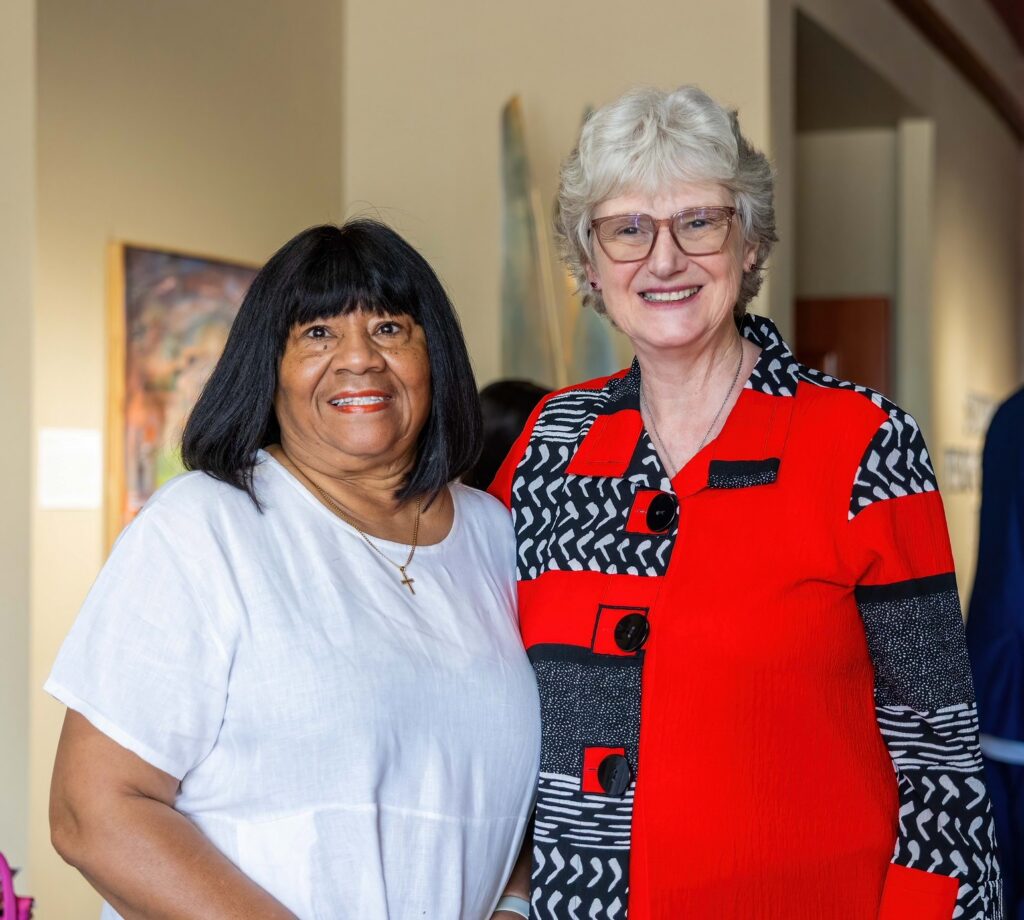
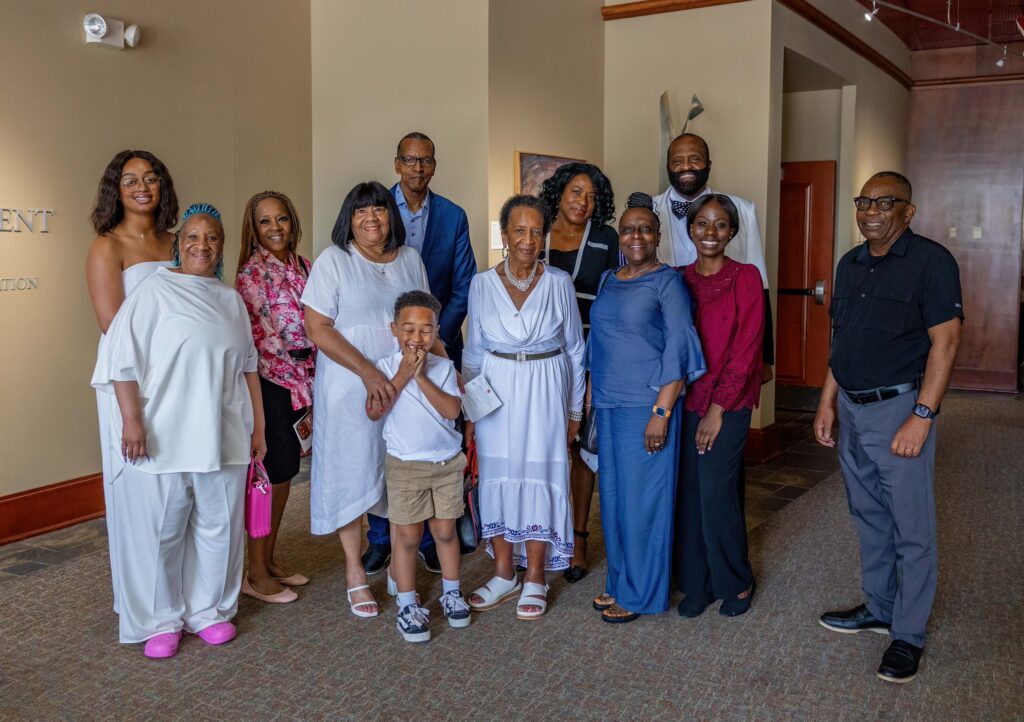
Cardwell’s wife of 38 years, Flora, said it was a “heartwarming experience” to have the center renamed for her husband, and she thanked “President Alison” for recognizing and celebrating his legacy.
“I’m a little emotional right now,” she said, pointing to a young boy in the lobby of Schewel Hall. “That’s my great-grandson, and for him to experience this about his great-grandpa, to me that is awesome. That the University was willing to do this, to allow him a chance to really hear them talking about his great-grandpa, that’s amazing to me.”
You can donate to the Percy Wootton Research Center or Owen Cardwell Center for Leadership here.