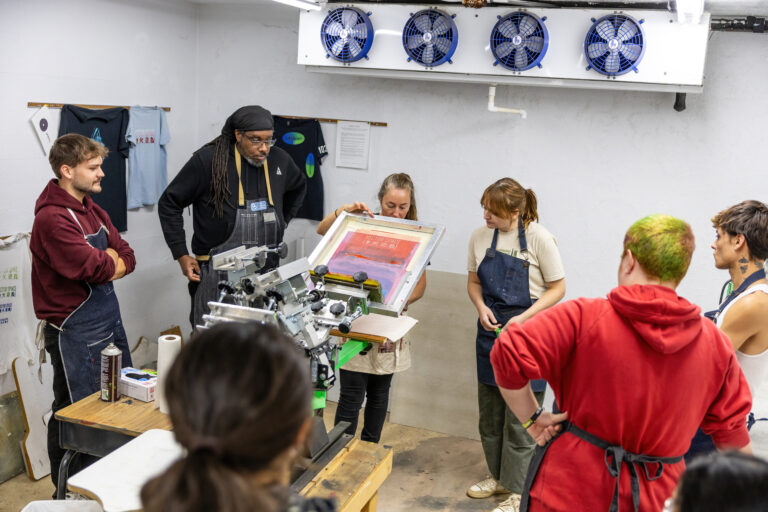
In late-October, students enrolled in 3d Printing for Art and Design, Introduction to Printmaking, and Figure Drawing classes at the University of Lynchburg spent a couple of hours at Vector Space, a local makerspace.
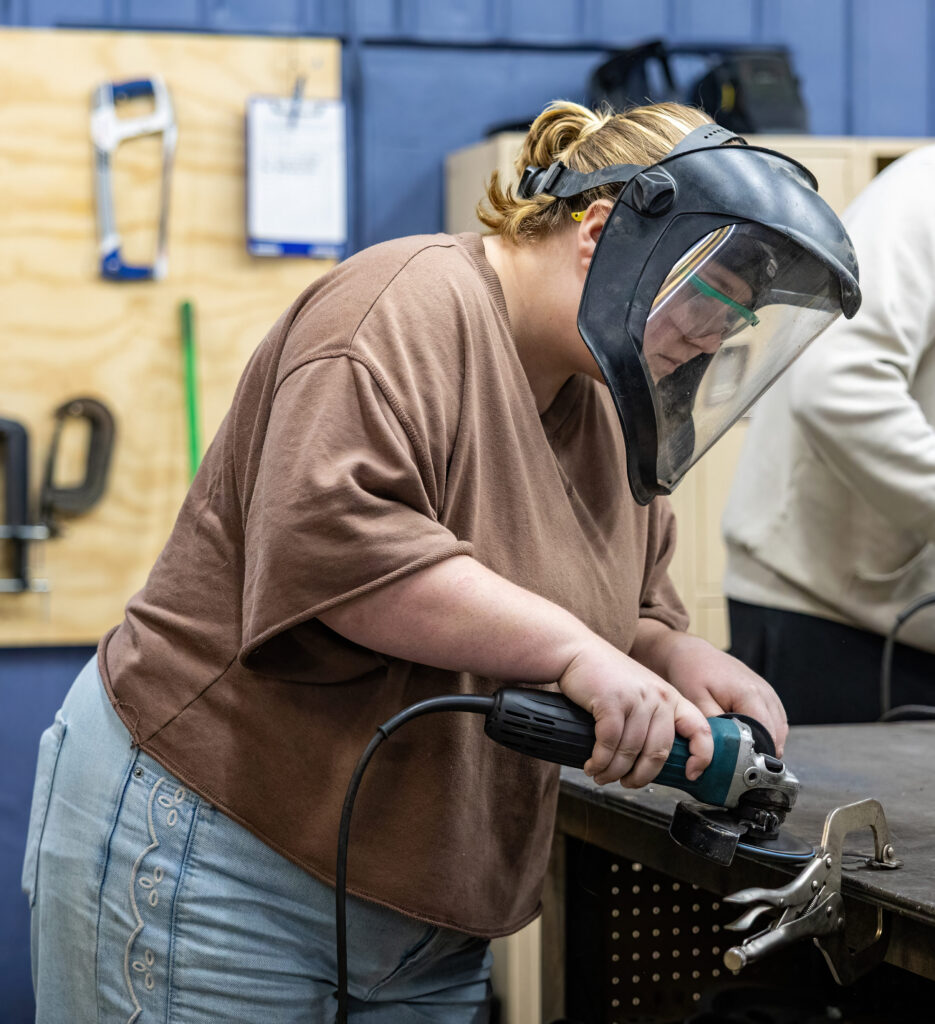
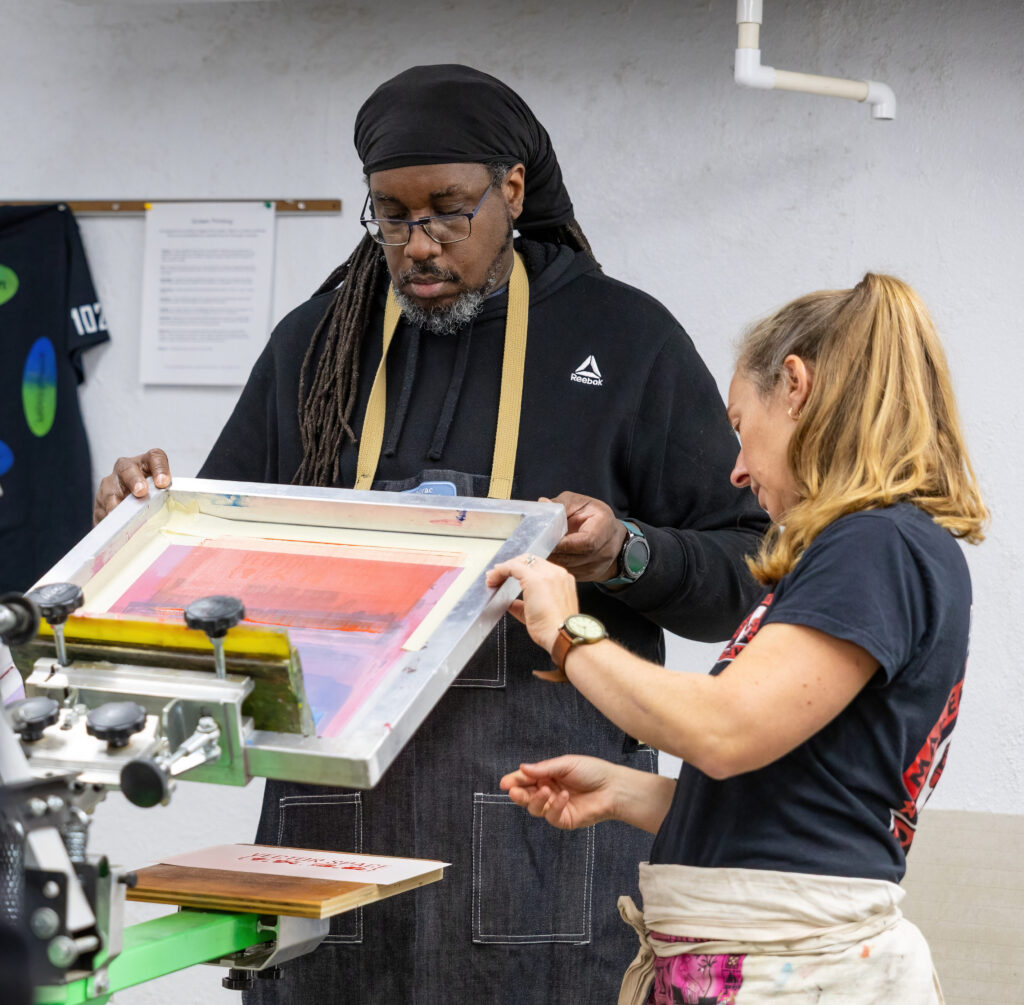
Accompanied by Chelsea Tinklenberg and Sierra Schneider, members of Lynchburg’s art faculty, the students learned screen-printing and metalworking techniques and made some fun items to take home.
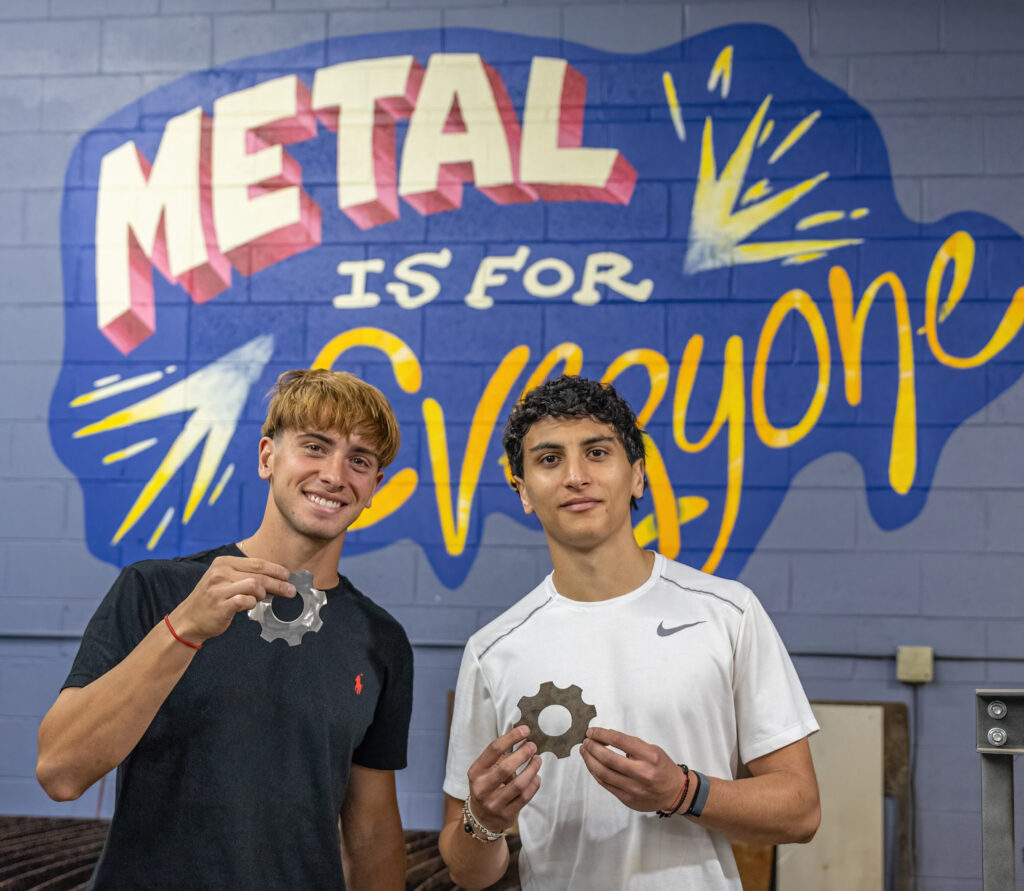
Tinklenberg, an associate professor of art, talked recently about the visit and about how, at the University of Lynchburg, art is for everyone.
Whose idea was it to take the classes to Vector Space?
I coordinated the visit for a couple of reasons: Sierra’s printmaking class is currently working on setting up our own screen-printing facilities on campus, so I thought it would be beneficial for students to see Vector Space’s setup and get some hands-on experience.
We’re also offering ART 376: Digital Fabrication – Community-Engaged Making next semester, which meets at Vector Space. I wanted to introduce more students to the space, especially those in my current 3D printing class, and hopefully encourage them to sign up.
How long have you been collaborating with Vector Space?
I’ve been a member since 2020. When I moved to Lynchburg in 2019, I immediately sought out a place to work in metal, my primary sculptural medium.
When I learned to weld in college, we had a pretty archaic setup. I was basically working with a welder and an angle grinder! So, I’ve been ecstatic to have access to Vector Space’s fully equipped metal shop, with bending tools, bandsaws, and CNC plasma cutters.
The plasma cutter in particular has completely changed my world as a sculptor, opening up possibilities for shapes and forms that would otherwise be incredibly difficult to create.
That relationship has grown into a teaching partnership. We’ve offered our community-engaged fabrication course three times, previously as ART 222, with students creating public sculptures for downtown Lynchburg and two on campus, “The Hive” and “Dell’s Bench.” I’m excited to continue that work through ART 376 as part of our new digital fabrication minor.
Isn’t the broader message “Art is for everyone”? What is the value of art to non-art majors?
Absolutely! One of the biggest misconceptions about art education is that we’re simply training students to become professional artists. Art teaches creative problem-solving, experimentation, critical thinking, and how to approach problems that don’t necessarily have one correct answer. Those skills are valuable in any profession.
There’s also something really important about making things with your hands. Not every student who takes a ceramics class will become a ceramic artist, but they might discover something they love doing for the rest of their lives. That’s valuable, too!
Would you welcome students outside the art major into your classes?
Absolutely, and I encourage it! Our new digital fabrication minor is a great example of how art and design connect with other disciplines.
A business student might use 3D printing to prototype a product, a pre-med student might create an anatomical model, or an education student might design a teaching tool. You don’t have to consider yourself an artist to benefit from learning how to make things!
How many different kinds of art classes are taught each semester?
We offer courses in drawing, painting, sculpture, ceramics, photography, graphic design, printmaking, and digital fabrication, with both introductory and advanced options.
Can you tell me about the art department’s collaboration with Knight-Capron Library?
This project actually takes a page from the heart of what Vector Space does so well: using making and creative problem-solving to impact the community, even in seemingly simple ways.
My 3D printing students have been learning 3D modeling, and I wanted them to apply those skills to a real-world problem with an actual client. We visited locations around campus to identify needs, and after talking with Jenny Horton and the library staff, we decided on a book holder, something they use constantly and never have enough of.
These are a simple design but cradle the book at a slight angle so the library can create forward-facing book displays.
Students have to listen to their client, understand how an object will be used, and work through multiple versions of a design to create something functional. I love that such a simple object can teach technical skills while also contributing something useful to our campus community!
Anything else you’d like to share?
One of my biggest goals is to help students see how what they’re learning in the classroom connects to the world outside of it. Partnerships like Vector Space allow students to work alongside artists, makers, engineers, and people from all kinds of backgrounds.
I’m really excited about the direction our art department is heading with the new digital fabrication minor, our growing facilities, and more opportunities for students to connect with the Lynchburg community.