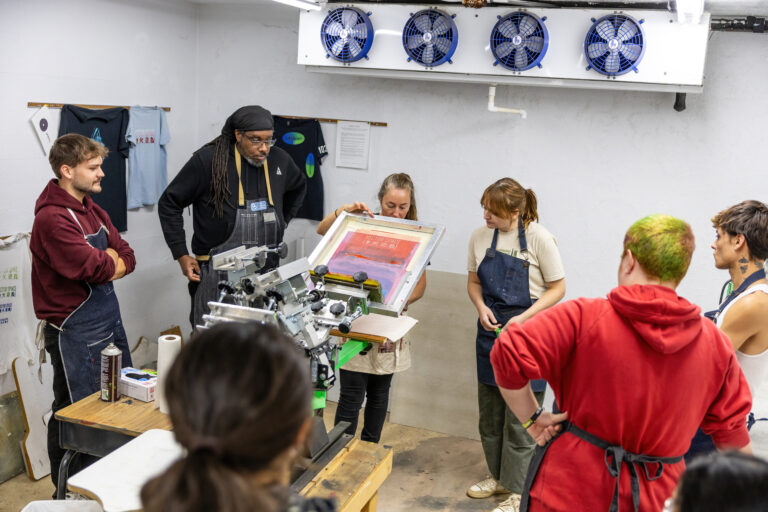
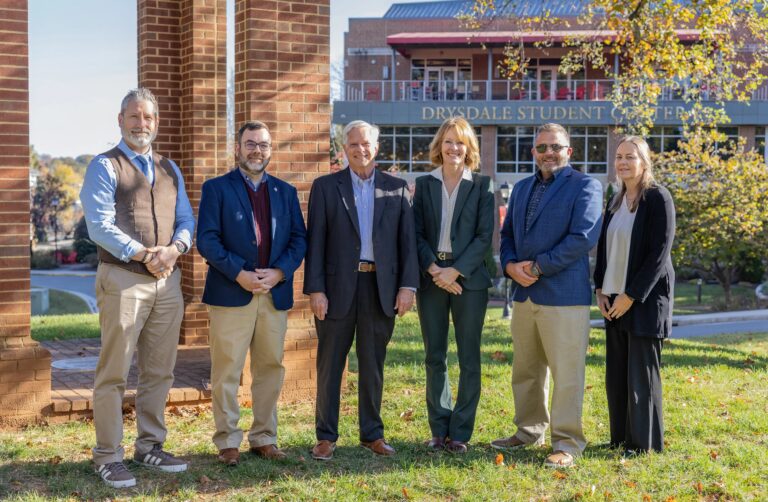
Michael “Mike” Gilman, founder and chief technical officer of Gilman Technologies, spoke to Professor Samuel Hovan’s sports broadcasting class on Tuesday, Nov. 17. Gilman is a three-time Sports Emmy Award winner with more than 30 years of experience in sports television.
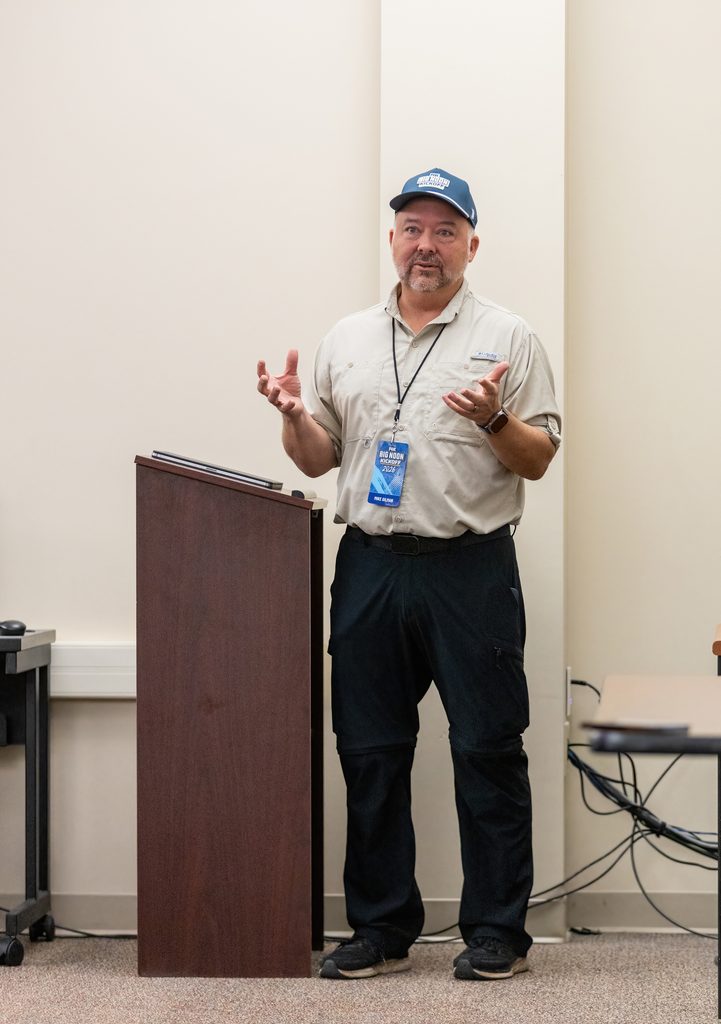
“If you watch a game, or a pregame show — typically you have two sets of people,” Hovan said. “You have people who are called talent — that’s your camera facing people. … And then you have everyone else who’s behind the scenes.”
The people behind the scenes are often referred to collectively as “production,” and Gilman has built his career in that part of the industry.
As an independent contractor, Gilman works as a communications director for Fox Sports, leading communications for college and professional sports broadcasts and pregame shows, including the platform’s top college football pregame show, “Big Noon Kickoff.” He has worked on broadcasts of the Super Bowl, FIFA World Cup, Daytona 500, and Indianapolis 500, among other major events.
“You name a big sporting event and he’s probably worked it,” Hovan said.
Hovan invited Gilman to discuss his career and introduce students to opportunities that aren’t as widely known.
“There’s not a lot of people that want to get into doing this, and so as [Gilman] and people in his age group retire, there’s a void there,” Hovan said. “Most people don’t recognize it’s an option because it can be hard to get into.
Gilman said it’s estimated that only 10,000 work in major national events in sports broadcast production.
Alongside stories of travel, equipment, and major sporting events, managing stress became a central theme of the talk.
“Stress is a big part of this job,” Gilman said. “I tell people, just be careful if you want to go into comms because the stress will kill you. … People have gone to the hospital in the middle of shows just because of the stress.”
The pressure comes from early starts, long days, weekly travel, maintaining expensive technical equipment, and troubleshooting problems during live broadcasts. There is also the responsibility of producing a broadcast worth millions of dollars. During 20 to 30 weeks of travel each year, Gilman said, the schedule can leave him with only two days a week at home with family.
“Getting in and showing competency and then showing that you can handle the stress — that’s really important,” Gilman said.
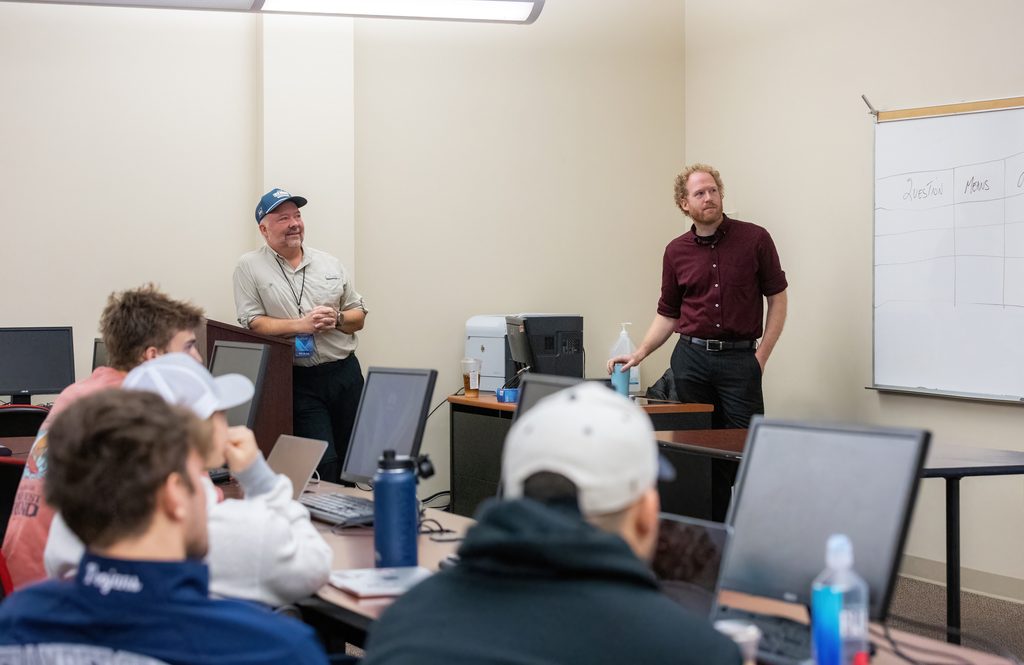
Hovan emphasized the importance of finding healthy ways to manage that pressure.
“I can speak from personal experience as well,” Hovan said. “Finding a way to relieve that stress … For me, going and working out can do that. Running, praying, talking to your special other person, whatever it is, finding those things is really valuable.”
Gilman agreed, adding that his faith helps him handle the stress of his career.
Morgan Mickle ʼ30 was engaged throughout Gilman’s talk.
“Learning how the industry works … it was so interesting to me,” said Mickle, a beach volleyball player and sports management major. “He laid it out for us — this is why the hours are grueling because this is what has to happen.
“It wasn’t a bad reality, but [it was] good to see the reality of the industry and its standards.”
Sitting beside Mickle was Olivia Radford ʼ30, a golfer and communications major. Both students were impressed by Gilman, and the number of industry connections Hovan had brought into the course.
“This guy’s pretty cool,” Radford said of Gilman. “Getting to hear his story and saying that he won three Emmys, [I thought] ‘holy cow, this guy’s legit!’”
Mickle added, “[Professor] Hovan has a lot of connections and it’s been very nice to immerse ourselves with the abundance of connections that he has.”
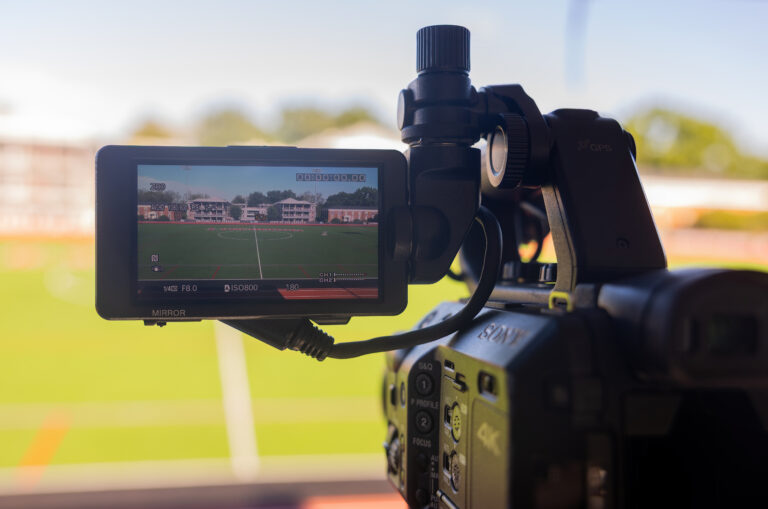
All students in the course are required to work eight games with the Lynchburg Hornets Sports Network, or LHSN, which produces live broadcasts of University sporting events. Those games give students a taste of what Gilman and others in production experience.
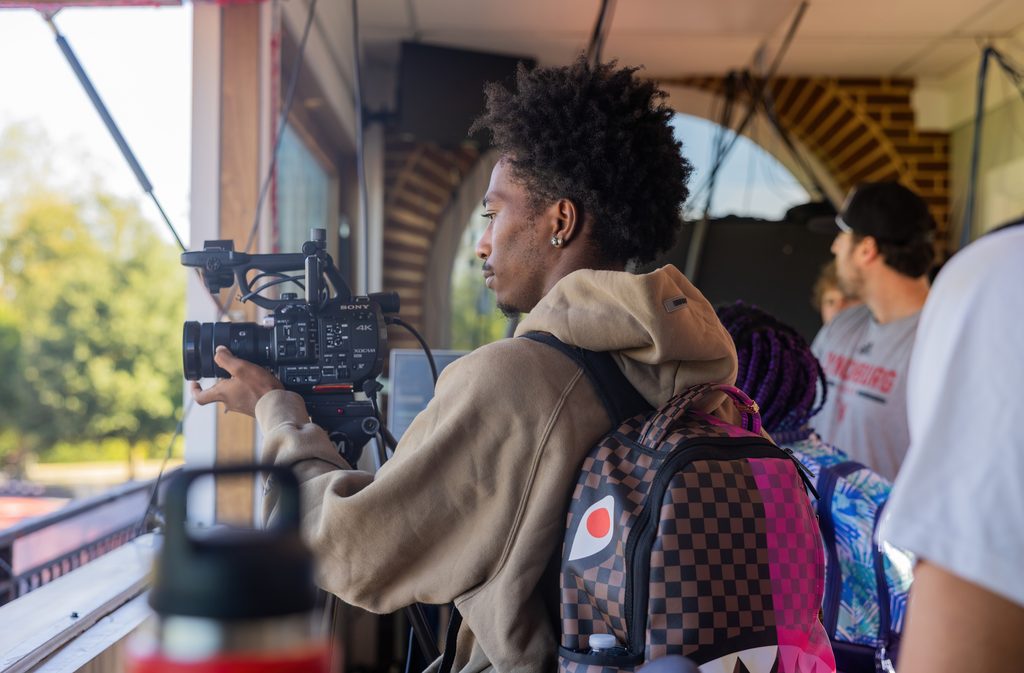
“I’ve been running replay for most of all of our games so far, and I’ve really enjoyed it,” Radford said. “I’ve sat right beside the director’s seat. … It’s really interesting to me just looking at [the] behind the scenes and putting everything into one product. …
“It can be stressful at times. We’ve had our upsets and everything, but really, I’ve just enjoyed it overall.”
Students faced one such setback a week earlier, when an internet outage in Turner Gymnasium disrupted LHSN’s coverage of a volleyball playoff game.
“They weren’t the ones in charge, but I had some students that were there,” Hovan said. “I was like ‘What do you do in that situation?’ Rule number one is, I get something on the air. I can talk about that in the classroom, but until you actually experience [the moment of] everything is on fire around us, you don’t know.
“There are times where the viewer at home won’t know that everything is breaking. When the internet goes out, it’s very obvious, but there are times where things are going wrong behind the scenes. Your job is to not let people know that’s happening.”
Gilman made a similar point through multiple examples of technology failures at major events. He summed up a critical rule of the industry this way: “You can have failures, but it can’t make air.”
Reflecting on the talk, Mickle said, “I don’t believe I would want to do the role that Mike is currently doing, but I would like to be in the industry.”
Radford also does not see herself pursuing Gilman’s role, but the course has helped clarify her interests.
“I definitely had broadcasting in mind coming into Lynchburg, but I wasn’t sure with newscast or live sports broadcasting, but doing this class and working with LHSN — it’s really convinced me to take this path,” she said.