When Annette Stadtherr saw an email in her inbox about a designation University of Lynchburg could receive that would recognize its dedication to first-generation college students, she jumped at the chance to apply for it.
“I’m a member of the National Association of Student Personnel Administrators, so when the email came through, I read through the application and thought, ‘We can do this. We should have this recognition,’” Stadtherr, director of multicultural services at Lynchburg, said.
As a result, the University has been named to the 2021-22 First-gen Forward cohort by the Center for First-generation Student Success, an initiative of NASPA–Student Affairs Administrators in Higher Education and The Suder Foundation.
“First-gen Forward now recognizes and supports over 200 diverse institutions across three cohorts, all of which continue to lead the nation through their commitment to first-generation college student success,” said Dr. Sarah E. Whitley, assistant vice president of the Center for First-generation Student Success.
“We are pleased to welcome the University of Lynchburg for their long-term commitment and demonstrated strategies for advancing first-generation student initiatives.”
According to Stadtherr, Lynchburg is only the second private institution of higher learning in Virginia to receive the distinction. “It’s a selling point for us,” she said. “It also opens the door for us for professional development for staff and leadership development for our first-gen students through conferences, webinars, and other resources.”
Lynchburg has numerous initiatives that support its first-gen students, including the Summer Transition Program. STP targets first-gen students and other populations with the goal of getting students “more intentionally acclimated to the campus community and resources,” Stadtherr said.
Lynchburg has a chapter of Alpha Alpha Alpha, the national honor society for first-gen students, and is involved in GEAR UP, a U.S. Department of Education program that stands for “Gaining Early Awareness and Readiness for Undergraduate Programs.” GEAR UP’s benefits include, among other things, a one-time, $5,000 grant.
The Office of Multicultural Services and the Career and Professionalism Center are involved in an 18-month partnership with the Virginia Foundation for Independent Colleges. Through this partnership, 20 first-gen juniors at Lynchburg are participating in Enhancing Career Preparedness, a program that kicked off in February.
Lynchburg’s Student Success Team has a subcommittee focused specifically on the needs of first-gen students, and the University has a dedicated webpage where first-gens can find resources.
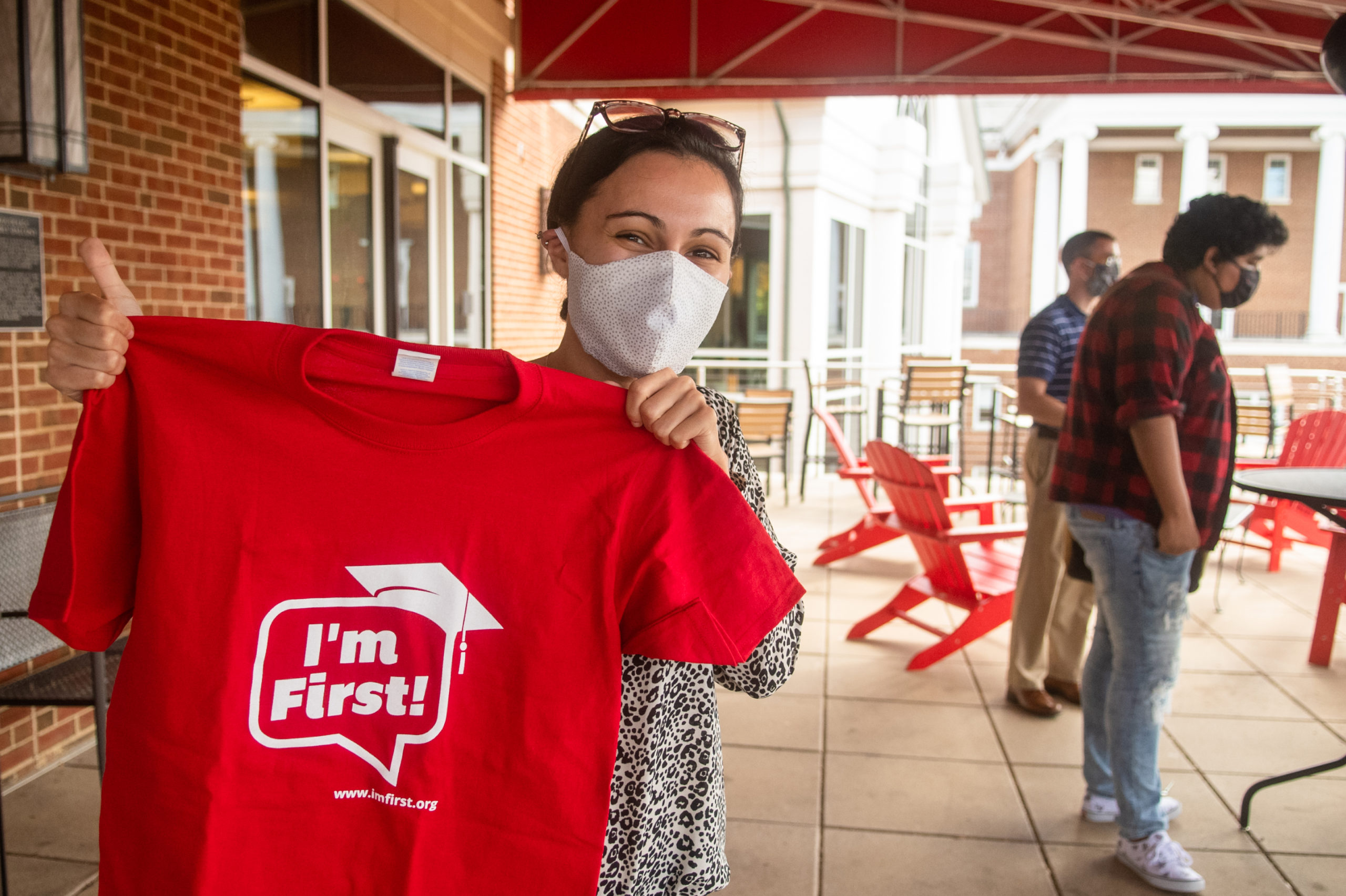
In November 2020, the University participated in the inaugural National First-generation College Celebration by distributing “I’m First!” T-shirts to first-gen students, faculty, and staff, and with a social media campaign.
As a member of a First-gen Forward cohort, Lynchburg will receive professional development, community-building experiences, and a first look at research and resources available through the Center for First-generation Student Success.
Interested faculty and staff will be afforded opportunities to engage with peer institutions who are also creating environments that improve the experiences and outcomes of first-gen students. In June, for example, Stadtherr will attend the virtual First-gen Forward Workshop.
After two successful years in the program, institutions are eligible to apply for recognition at the Advisory level.
“First-generation students are part of a marginalized group, meaning they are at risk for not completing their education,” said Stadtherr, who was a first-gen student herself. “Many don’t know what they don’t know and are having to navigate this journey themselves without the assistance of their parents/families who have done so before them, just as I did.
“I was successful in doing so. So, like University President Alison Morrison-Shetlar, also a first-gen, I have a passion for ensuring the success of these students. I’m just excited about the opportunities that await us with this incredible recognition. There will be a lot of commitment for us over the next two years, but I welcome the challenge.”