Trae Watkins is fond of the saying: “I don’t care how much you know until I know how much you care.”
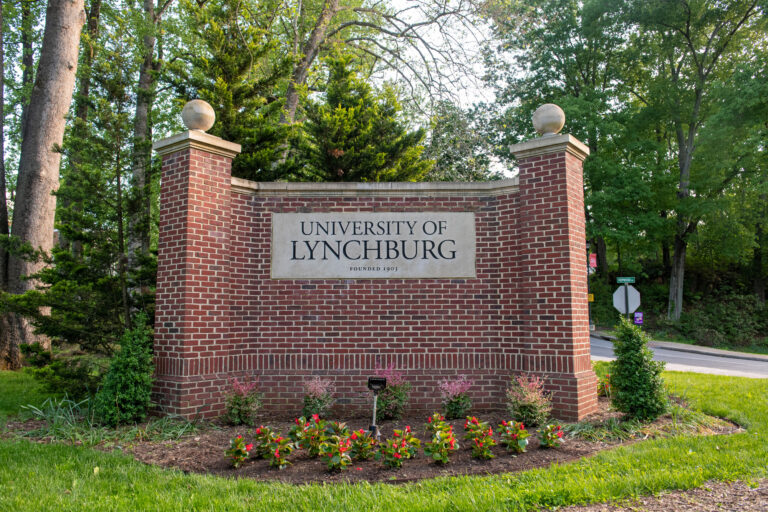
As co-director of Good Gangs, a grant-funded program administered by the University of Lynchburg, Watkins and his team help selected ninth-grade students discover their strengths, build meaningful relationships, and create positive pathways before violence becomes an option.
Watkins credited the program’s success to its team of mentors, whose consistent presence and relationships with students, he said, form the foundation of the program.
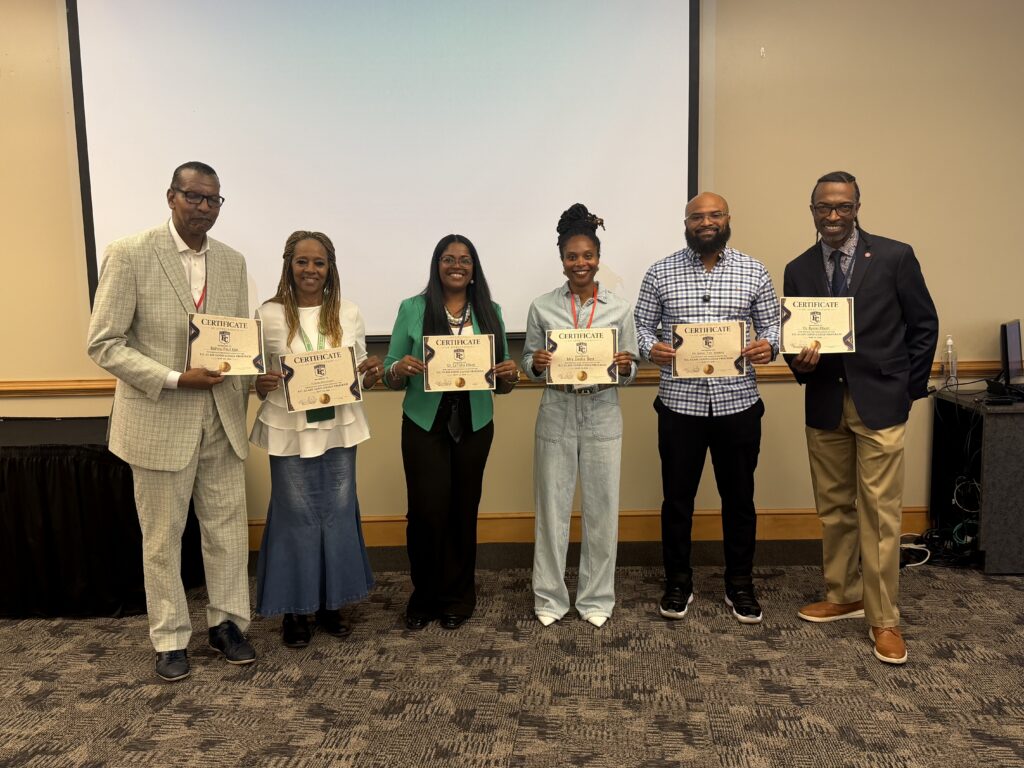
Alongside co-director Pastor Byron Elliott, the mentoring team includes Dr. Sheron White-Simpson, Bishop Paul Kee, Desha Best, and Dr. Letitia Elliott, each of whom “bring unique experiences and strengths to help students feel seen, valued, and supported.”
“We just pour into [the students],” Watkins said. “Just show them love. We cover everything from life skills, to [their] future in school, how to connect and engage with their teachers, … we teach them about money, and we paint a very realistic picture of what’s happening in communities … the economic factors … and what life is really going to look like if [they] don’t graduate.”
Starting in July, the Good Gangs program will launch a new phase in their operations — one that will try to reach more students in the community, and also their parents.
The realization of this second phase has become possible due to funding from the Virginia Department of Criminal Justice Services’ Firearm Violence Intervention and Prevention Fund, which provided supplemental funding to increase the current grant from $200,000 to $500,000.
The University is appreciative of the support of DCJS and thanks Jenna Foster, DCJS’s capacity building and sustainability coordinator and Children’s Justice Act coordinator, for her role in working with grantees and their programs.
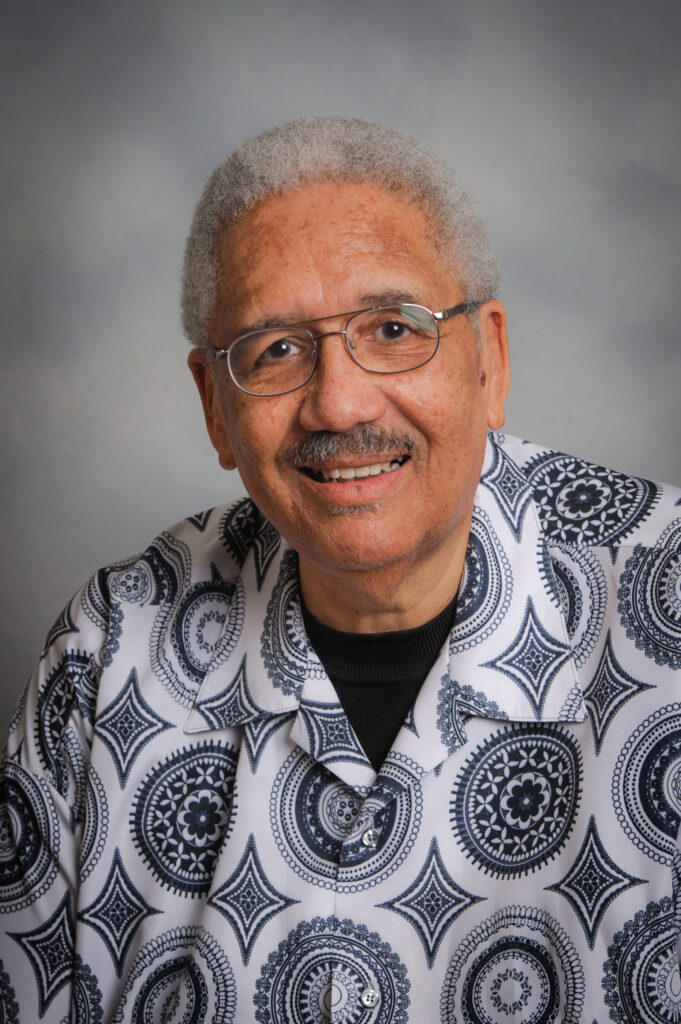
Good Gangs was launched through the University of Lynchburg in 2022. Its founder, the late Dr. Owen C. Cardwell Jr., was the Rosel Schewel Distinguished Professor of Education and Human Development, a pastor of Diamond Hill Baptist Church, a renowned civil rights activist, and one of the first Black students to integrate E.C. Glass High School in Lynchburg, Virginia.
Cardwell worked to improve the lives of children throughout his career, particularly those from disadvantaged backgrounds. He once wrote, “I believe that children are not problems to be solved, but rather assets to our community and that every adult can be and should be asset builders.”
Watkins first met Cardwell in November of 2021 at a community resource fair. As community development officer for the Bank of the James, Watkins was working on renovations to the Hunton Randolph Community Center. Cardwell and Dr. Roger Jones, professor emeritus, attended the fair on behalf of the University of Lynchburg.
At the event, Cardwell told Watkins about Lynchburg Tomorrow, an initiative run through the University of Lynchburg that brought together various nonprofits, agencies, schools, businesses, and faith-based organizations to promote a positive culture in the city of Lynchburg.
At that time, Watkins was searching for a way he could become more active in the community. He was “impressed” by Cardwell and interested in his ideas for grassroots activism. Watkins respected Cardwell for the way he would “stand on his principles” but also “respect everybody’s opinion and perspective.”
“Dr. Cardwell and I didn’t always agree on everything,” he said. “As a matter of fact, a lot of times that we would spend together, we would find ourselves in friendly debate … but we were able to get a lot done.”
Cardwell passed away in May of 2025, leaving the program to Watkins and Elliott, as part of what has now been dedicated as the Owen Cardwell Center for Leadership at the University of Lynchburg. Watkins credited Elliott with helping carry Cardwell’s vision forward while maintaining the program’s emphasis on relationships, strengths, and leadership development.
“It takes more than one person to be Dr. Cardwell, I can tell you that,” Watkins said.
The University of Lynchburg received grant funding to launch Good Gangs in 2022. To structure the program, the team pulled inspiration from the Search Institute’s 40 Developmental Assets Framework — experiences and qualities that have been proven to positively impact childhood development.
“We put kids through the developmental assets,” Watkins said. “There’s 20 internal assets and 20 external assets [and] it basically gives us an insight to what [a] kid has and what he doesn’t have. Based on that, we can determine exactly where we need to fill in those gaps.”
But getting them to that point takes a lot of hard work and patience.
“A lot of times, it can be tough getting kids to open up,” Watkins said. “When I tell you that we had to earn their trust and respect, I mean that for some students it might come after a month or two. For other students, if we start in September, it might not be until March or April.”
Originally, the plan was to hold Good Gangs sessions at Diamond Hill Baptist Church, but by 2023 the program was being run out of the Fort Hill Community School. Watkins said they also held sessions at Linkhorne Middle School. The beginning of the program was a bit like “trying to fix an airplane while it was in the air.”
Like many school-based initiatives, Good Gangs was also navigating the challenges of implementing a new program as schools were recovering from the disruptions caused by the COVID-19 pandemic. Watkins gave credit to the administration and staff at E.C. Glass High School for embracing the program and helping establish a strong foundation.
“It took us a while to learn what works and what doesn’t work,” Watkins said. “We had all these key elements and core principles [the developmental assets], but it was like, ‘How do we utilize them in the right way?’”
Through this process of discovery, the program directors realized that going after the right target audience was crucial for their success. They began to consider that the best use for their curriculum would not be middle schoolers, but ninth graders.
“When we got to E.C. Glass and started working with ninth graders,” Watkins said, “it really dawned on us, ‘I think we just found our sweet spot.’
“It’s the perfect time where we can make a difference because we are addressing students that are oftentimes at a crossroads of dropping out of school or potentially joining a gang because they’re either getting suspended from school … or skipping school, and the only thing waiting for them out there are the streets.”
A typical Good Gangs session lasts about 45 minutes to an hour during students’ lunch breaks. One of the loadbearing pillars of the program is the Clifton Strengths assessment tool, which all participants take. It’s an assessment developed by Gallup that analyzes an individual’s unique traits and thought patterns in order to aid in their development.
“Whenever someone begins talking about what’s wrong with a student, our mentors intentionally redirect that conversation toward what’s strong with the student,” Watkins said.
“We want them to understand who they are. … Everyone has talents, everyone has value and something to offer society, and we want them to understand that … no matter who you are, [you have] a unique combination of gifts that nobody else has.”
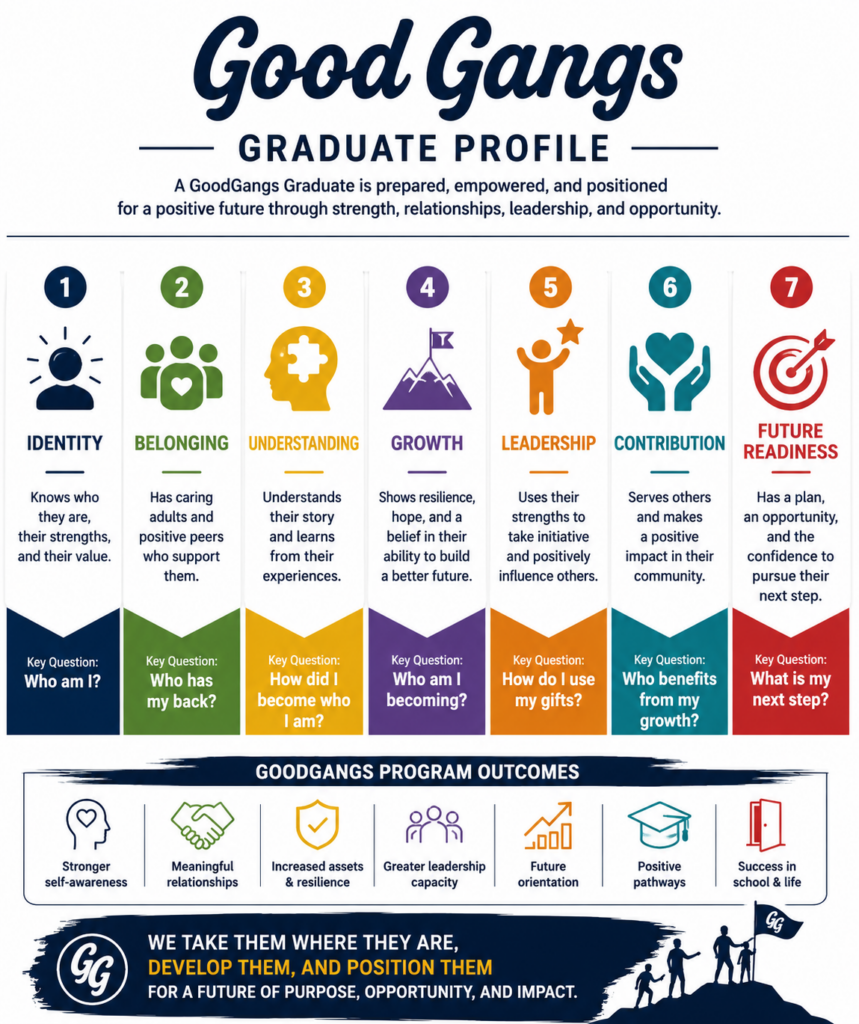
Watkins said that unlike many intervention programs that begin by identifying problems, Good Gangs begins by helping students understand their identity, discover their natural talents, and develop those talents into strengths that can positively shape their future.
They also guide students through positive visualization exercises, appoint them as class leaders, and do their best to help them develop a positive self-image.
“We introduce them to just about everything we can that will keep them interested in staying in school,” Watkins said, “and opposed to dropping out and joining gangs.
Watkins said that his experience interviewing youth for the University of Virginia Youth Gun Violence Research Project reinforced his belief that prevention begins long before violence occurs. He said that helping young people develop identity, relationships, and hope for the future are some of the strongest protective factors against violence.
“That’s essentially what we’re doing because that’s what leads to gun violence and … a lot of what we’re seeing in the community.”
During his time in the program, Watkins has seen “some major differences” in the students he and his team have mentored.
“We had a kid that was in our program last year who just earned a division one football scholarship,” Watkins said. “He’s a rising junior now.”
That same student was featured in a Lynchburg City Schools story in the winter of 2026, when an ice storm left most of the city’s roads buried under thick sheets of ice, and therefore inaccessible by car.
“LCS finally went back to school,” Watkins said, “but the student’s family were unable to get out because of the ice. Without any prompting, this student picked up the phone and called the superintendent’s office.”
The student explained the situation to the superintendent, advocating for himself that he was not truant, but simply unable to leave his house.
“The City of Lynchburg went to that student’s house, got the driveway clear, got that neighborhood cleared out, and the very next day the kid was in school,” Watkins said.
Beginning in July, Good Gangs will launch a new phase in their campaign to reach Lynchburg communities. They plan to reach not just students, but their parents as well. “Instead of just parent engagement,” Watkins said, “we will be doing parent development.”
Watkins said that many of the challenges students face at school are often rooted in challenges occurring at home, particularly financial stress experienced by their families. Those challenges can affect everything from attendance and academic performance to students’ emotional well-being, energy levels, and ability to focus in the classroom.
As Good Gangs expands its parent development efforts, the goal is not only to offer financial education but also to connect families with community resources and support services they may not know exist.
Watkins believes that Lynchburg is rich in resources, but many families simply aren’t aware of the programs available to help them. By helping parents access those resources and strengthening the home environment, Good Gangs hopes to create better outcomes for students both inside and outside the classroom.
For Watkins, it all comes down to the relationships they have been able to build, saying that even with all of the resources they have been able to bring to bear, none of it would matter without the essential human connection.
“If you don’t have that relationship,” he said, “it really won’t even matter.”
He believes relationships are what make everything else possible. Once students know they are seen, valued, and cared for, they become more open to discovering their strengths, developing confidence, and believing they have a future worth pursuing.
“That’s really what Good Gangs is about,” he said. “Helping young people discover who they are, understand what they have to offer the world, and build a future worth pursuing.”