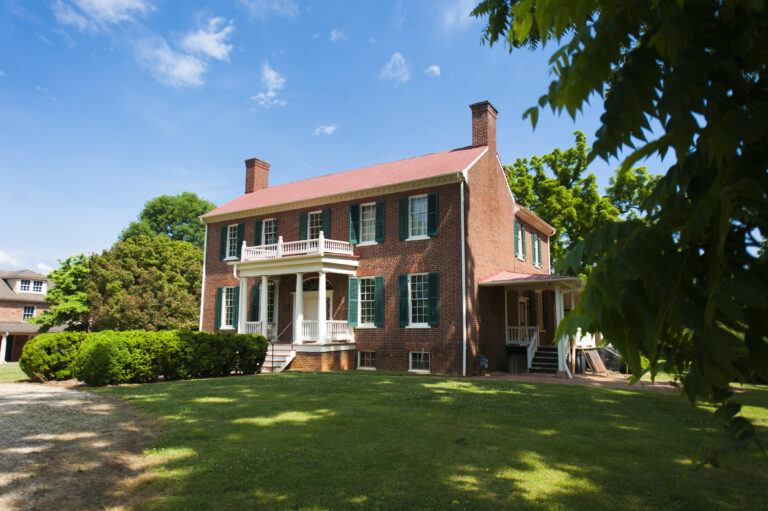
On March 31, the University of Lynchburg partnered with local nonprofit group Community Mountain to host a community roundtable discussion on the topic of improving student outcomes in Lynchburg City Schools.
Community Mountain’s stated mission is to “provide a free-of-charge platform to connect individuals in need with charitable organizations … and to support such organizations.”
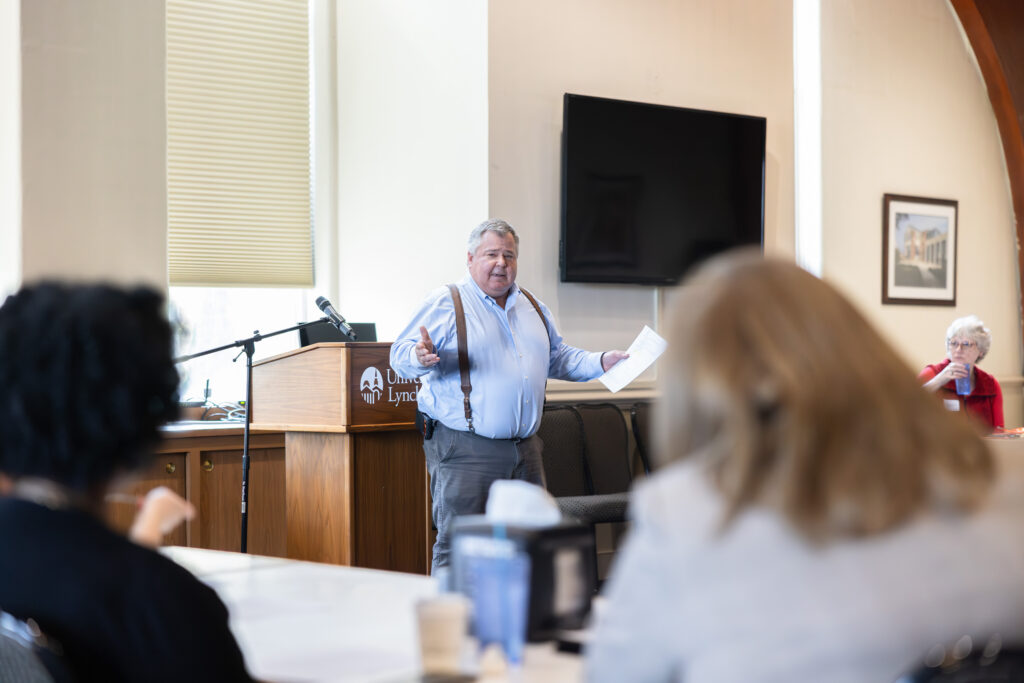
The roundtable, held in the East Room of Drysdale Student Center, brought together community leaders and concerned citizens from across the city.
The event’s agenda described its purpose as coming together to “align as a community around supporting our students — because literacy is connected to everything: opportunity, workforce, and long-term community wellbeing.”
Clay Coleman, the executive director of Community Mountain, has a background in information technology, which he used to gather data about student outcomes in the city’s schools.
He describes Community Mountain as “a pioneering platform that connects people in need with those who serve, supporting the Seven Towers of Community: Fellowship, Education, Workforce, Healthcare, Arts, Sports, and Civic Engagement.”
Coleman opened the discussion, acknowledging that the Lynchburg community faced a shared challenge of improving student outcomes and thanking the University for coordinating the event.
“The University … has been very gracious to work with us,” he said, “to sponsor this gathering, where we can come together as a community to share ideas, talk about some proposed directions, and make a plan to go forward together.”
University President Dr. Alison Morrison-Shetlar then gave a few remarks.
“I am so grateful for every one of you here today,” she said, “because what we do at the University of Lynchburg is provide leadership for anything that is needed by the community.
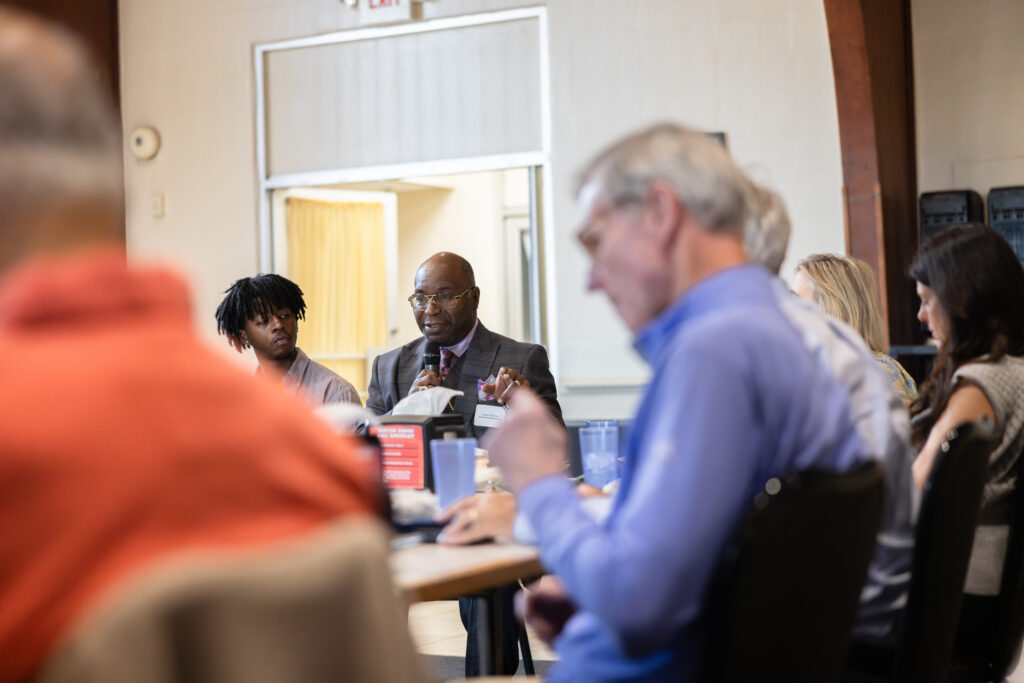
“And so, when Clay came to me and said, ‘We’ve got this initiative that can help literacy, reading, and mathematics,’ I said, ‘We’re in.’ …
“To me, this time, this era in education, is the right time to think about strongly partnering with each other. We want to be … one of many partners in moving the ability of our youth to read, write, and do math, so that they can succeed.”
Several attendees voiced concerns about problems the schools face. One of the biggest areas of concern was the achievement gap, a disparity in student performance caused by inequality.
Dr. Roger Jones, professor emeritus at the University, spoke of the importance of creating a culture that supports students’ academic growth.
“What parents need to do in the home is create a culture … where education is valuable,” Jones, who has 54 years of experience in K-12 education, said. “What the schools need to do, in terms of creating culture in the school divisions, is … help students get to where they want to be.”
He said the community also has a responsibility to help students.
“What makes a difference,” he said, “is when you work with students, increase expectations, increase parent involvement and engagement, celebrate small steps. … I don’t care if you’re in a church, a synagogue, or a nonprofit — everybody makes a difference.”
The Rev. James Coleman, a local pastor who has worked with the Virginia School Board Association, said it’s also important to take a look at “flight” from the schools.
“Who’s leaving those divisions? Who’s staying in those divisions? … There’s a lot that goes into these scores,” he said. “There are a lot of people who are working hard in our school divisions, but you work with what’s in front of you. …
“I want us to focus less on the problem … and get to the solutions.”
After the first round of input, Clay Coleman proposed a solution.
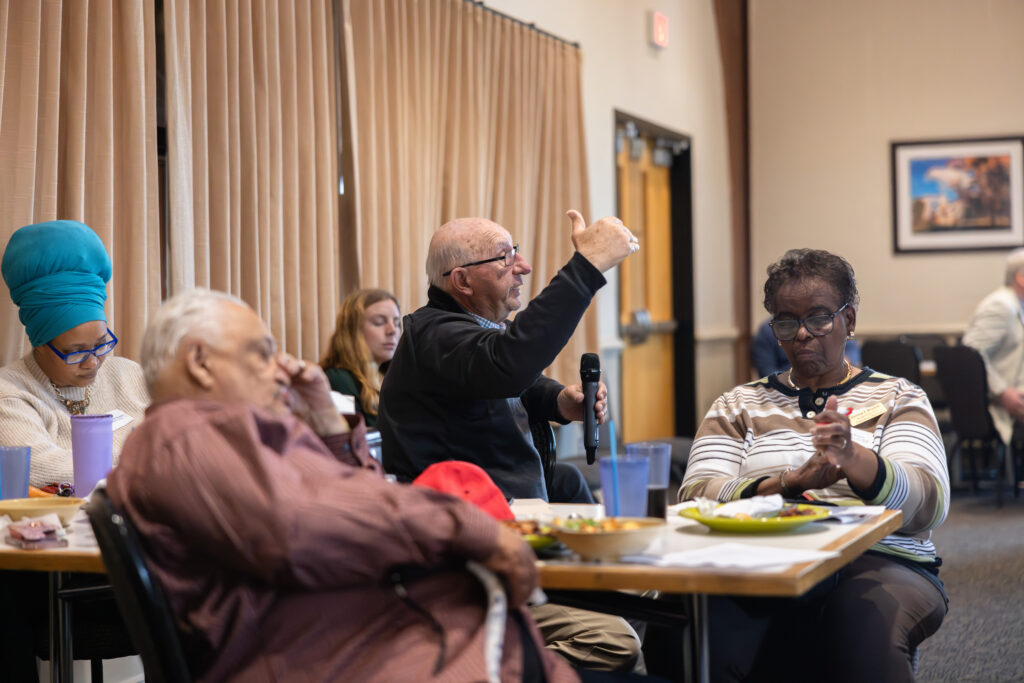
“What we’re proposing is, let’s implement a community-wide initiative to bring volunteers to the table,” he said. “We work with the children one-on-one … where they have someone like a big brother or sister who can help them out, get them where they need to go. …
“So what we want to do … is have one place that people can come and register their willingness to serve.”
A research brief from Community Mountain describes the model as providing not only tutors but “Encouragers, mentors, and trusted adults,” adding that a relationship-centered approach will help students “Build confidence,” “Stay engaged in their academic journey,” and “Develop a positive outlook toward learning.”
Several more attendees shared input and concerns, including LCS educators and parents of currently enrolled students. Jones emphasized the need for parents to build relationships with teachers.
“We have good teachers,” he said, “and we have good principals in this school division. We need to support them. … Support the school division. No matter what you do. It’s easy to tear something down. It’s a lot harder to build something up.”