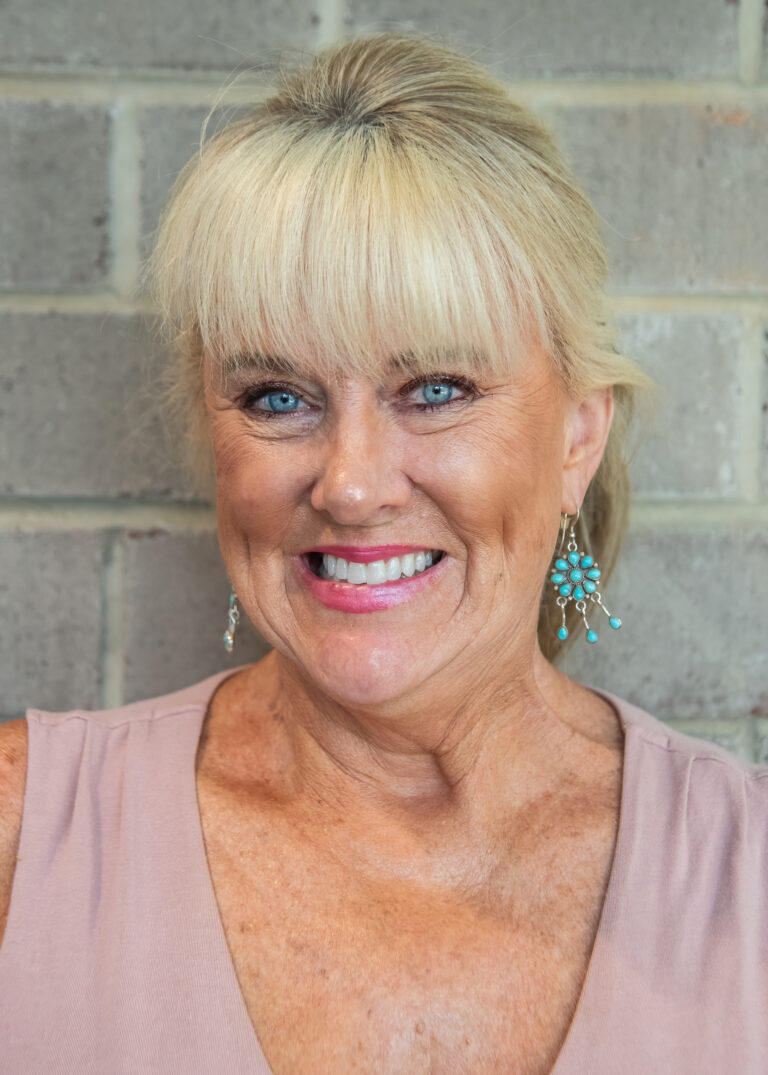
Amy Enneking
Administrative Coordinator, School of Liberal Arts and Sciences, Westover Honors, Assistant Director, Governor’s School

In addition to the many cool projects featured in our video, in past years participants also created the following websites using Google Sites:
The 2027 Summer Residential Governor’s School for Mathematics, Science, and Technology offers gifted high school juniors and seniors an intensive educational experience in mathematics, science, and technology.
July 4 – July 25, 2027
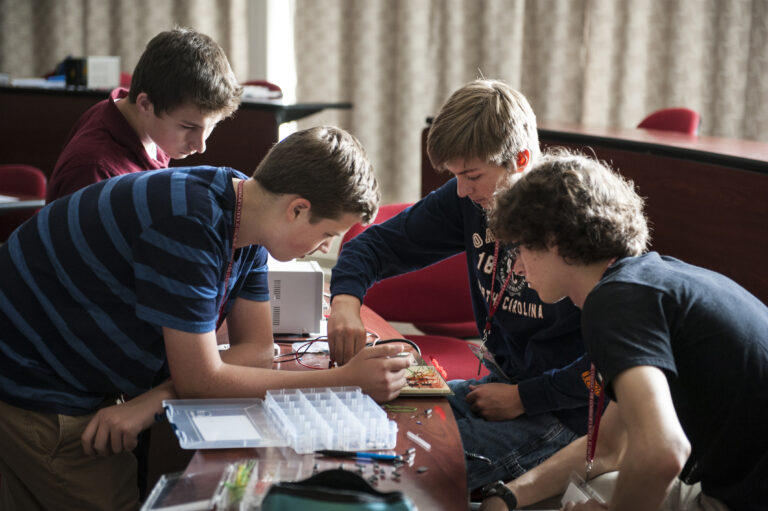
Students live at the University of Lynchburg for three weeks. During this time, students are involved in classroom and laboratory work, field studies, research, individual and group projects, and seminars with noted scholars and other professionals. A director and a student-life staff member will supervise students 24 hours a day throughout the program.
The Summer Residential Governor’s School for Mathematics, Science, and Technology at the University of Lynchburg is one of several Summer Residential Governor’s Schools in the Commonwealth of Virginia. It is part of the commonwealth’s broader Governor’s School programs.
Questions about the application process or where to submit completed applications should be directed to the gifted education coordinator/counselor at your local school. University of Lynchburg program directors cannot address division or school-specific procedures, nor are they able to accept application materials.
The Governor’s School team periodically updates course offerings to align with evolving student interests.
AI takes many forms, but at its core it is the study of how computers make decisions to solve problems. This course will introduce students to principles of artificial intelligence through the lenses of game playing and language modeling. Game playing is a classic AI domain that requires decision making strategies and learning from past outcomes. Language modeling is a hot-button topic due to advanced models such as GPT-3. Such powerful models can trace a direct heritage to the AI fundamentals that predate modern neural network methods. This class will introduce students to those fundamentals and give them hands-on experience with designing, building, and evaluating solutions to foundational AI tasks. Indeed, a primary concern for this course is helping students understand what AI—as a technical discipline and not just a buzzword—actually is (and what it is not).
Requirement: Some experience writing computer programs.
Voted by past students as one of the best Summer Residential Governor’s School experiences, this course provides a comprehensive field-and laboratory-based study of water resources. Basic hydrology, including water movement and stream, groundwater, and lake dynamics will be emphasized. The problem with water is that there is usually too much or too little! We will pay particular attention to the role of dams in water regulation and ecosystem renewal after dams are removed.
The course will conclude with a field study and report on the impact of road culverts on erosion and deposition in small streams.
What precisely is a comet? Are we really in danger of colliding with a comet or an asteroid? Have such events happened in the earth’s past? Questions like these will provide a starting point for our investigation of the current understanding of the age, size, and nature of the universe. Students will keep a nightly journal of a variety of naked-eye observations of the night sky, will use the Internet as a source of background information, discuss ways to observe and model astronomical phenomena, and will analyze a variety of astronomical data, all as we explore the wonders of our universe.
This course will teach students how to use quantitative research methods, focusing on research methods and data analysis using Statistical Package for the Social Sciences (SPSS) software. By the end of the course, students will be equipped to critically evaluate data, collect and analyze them accurately, and present findings effectively. They will also learn how to communicate scientific results to the general public. Each week, students will explore popular news stories, connecting course material to real-life examples. This will help them understand how statistical concepts from peer-reviewed articles are often summarized and presented in news stories, especially those they encounter on social media. The material in this course will take a heavy focus on psychology and health related research. We will debunk brain myths using evidence-based reasoning and practical exercises. In addition – students will have experiential labs where they will collect and analyze their own data using biofeedback machines, learn about survey design, pretest and post test evaluations, craft their own psychological measure and test its reliability and more. Students will be encouraged to develop creative projects exploring specific elements of the course that interest them as their final project.
When studying mathematics in school, we tend to focus on routine problems to hone technical skills. However, there comes a time when a student of mathematics must transcend the familiar, and face difficult problems by relying on a mix of cleverness, experience, and raw nerve. In this class, we’ll encounter some problems that we may not be able to fully solve, and a few that nobody has yet been able to solve. But we’re not going to be afraid to try.
In this course, we explore the drivers of weather and climate to understand dynamic systems. We analyze atmospheric conditions every day to understand how weather systems create different cloud types, ice crystal and droplet phenomena, and severe weather. We examine how meteorologists use a variety of remote sensing equipment and forecast tools, track the weather locally to globally, and discuss what to expect in our skies each week. We also explore global data sets and use data visualization tools from NASA, NOAA, and other agencies to understand global trends and future scenarios, and we’ll learn how mathematical climate model projections are developed. We embark on several field trips in the region to gain hands-on field experiences in different systems. Ideally, this class will also be the start of a life-long habit of sky watching for atmospheric phenomena and knowing where, when, and how to spot them.
Participatory science (also known as citizen or community science) engages members of the public in scientific research. Depending on the scientific discipline, contributions may include collecting data, classifying observations, transcribing historical records, training AI models, and more. In this course, we will: 1) Discuss fundamental principles of science. 2) Learn about the importance and potential limitations of broadening participation in a range of biological and physical scientific disciplines. 3) Explore and utilize multiple tools that allow anyone (including you!) to contribute to authentic scientific research. 4) Develop research questions and hypotheses that will be tested with publicly-available datasets. 5) Engage in basic data analysis and visualization techniques. 6) Practice communicating about scientific studies and findings to different audiences. This project-based course will include a mix of indoor and outdoor activities and will provide opportunities for individual and/or group work.
In Tales From the Genome principles of genetics and biotechnology are explored, including Central Dogma, DNA structure and replication, mutation, recombinant DNA technology, and the molecular basis of disease. DNA extraction, multiple applications of PCR and DNA electrophoresis, bacterial transformation, and identification of genetically modified organisms are a few of the ways students will earn valuable experience in hands-on lab applications of DNA technology . Students will also have the opportunity to examine and discuss practical and ethical challenges surrounding DNA technology, treatment of genetic disease, and what the future might hold in our genetic future! Governor’s School for another summer of genetics.
This course will cover the basic functions of Adobe Photoshop and After Effects with special consideration of their animation capabilities. Additionally, students will work with industry standard animation software Toonboom Harmony. Students will learn to manipulate images and video in 2D and 3D space. These techniques, with this software, are common in broadcast and internet advertising, TV show and movie credits, corporate video, and short form entertainment.
Governor’s Schools give gifted students academic, visual, and performing arts opportunities beyond those normally available in the students’ home schools. Students can focus on a specific area of intellectual or artistic strength and interest and study in a way that best suits the gifted learner’s needs.
Each program stresses non-traditional teaching and learning techniques. For example, small-group instruction, hands-on experiences, research, field studies, and realistic or artistic productions are major elements of instructional design across all schools.
Students become scientists, writers, artists, and performers as they work with professional mentors and instructors. Every effort is made to tailor learning to the needs of the community of learners that comprises the program.
The Virginia Governor’s School Program is designed to assist divisions in meeting the needs of a small population of students whose learning levels differ markedly from those of their age-level peers. The Virginia Governor’s School Program is grounded in best practices in gifted education and in delivering advanced content to able learners.
The Governor’s School programs are administered by the Virginia Department of Education, Office of Secondary Instructional Services, in cooperation with local school divisions, colleges, and universities.
A local director at each Governor’s School site has direct responsibility for the logistics of the program. Academic-Year Governor’s Schools have directors and regional governing boards that provide policy and administration of these schools. Program and site directors at the Summer Residential Governor’s Schools along with the specialists in the Virginia Department of Education work together to manage and maintain these programs.
The Department of Education, regional governing boards, local superintendents, site or program directors, school boards, and advisory committees establish policies for the Governor’s Schools. These policies are described in an administrative procedures document for each school. All Governor’s Schools annually submit a current administrative procedures document to VDOE.

Each Governor’s School maintains its standards through a system of internal evaluations. Summaries of findings are submitted to the Department of Education as part of the administrative procedures document. Internal evaluation methods may include collecting information from students and staff, interviews and written surveys with administrators, instructors, students, and parents, and analysis of other documents related to the programs.
Teams of external evaluators visit each Governor’s School regularly. Evaluation rubrics have been developed based on the National Association for Gifted Children’s standards (external link). The Governor’s School directors receive commendations and recommendations from the team sponsored by the Department of Education. The final report, sent to the director and the chairperson of the regional governing board, summarizes the findings and conclusions of the team.
During weekday mornings, each course will emphasize the science portions of the Governor’s School program. Faculty will stress scientific concepts and the ability to do mental calculations, along with the “doing of science” through laboratory and small-group research projects. These activities culminate with a series of colloquia on the Governor’s School’s final day. Each student team will report its results as scientists usually do at professional meetings, emphasizing rigor and clear standards.
Students will attend various “Second-Chance” courses in the early part of each afternoon. These courses provide an opportunity to participate in a course where participants are interested but not enrolled. The courses will be less formal and range from abbreviated versions of the morning courses to treatments of topics unavailable in the morning. They intend to inform and generate student discussion of the ideas and/or issues raised. At least one afternoon each week, a visiting scientist will provide a colloquium on topics of current research interest during this time slot.
Administrative Coordinator, School of Liberal Arts and Sciences, Westover Honors, Assistant Director, Governor’s School
Administrative Coordinator, School of Liberal Arts and Sciences, Music and Sciences, Governor’s School
