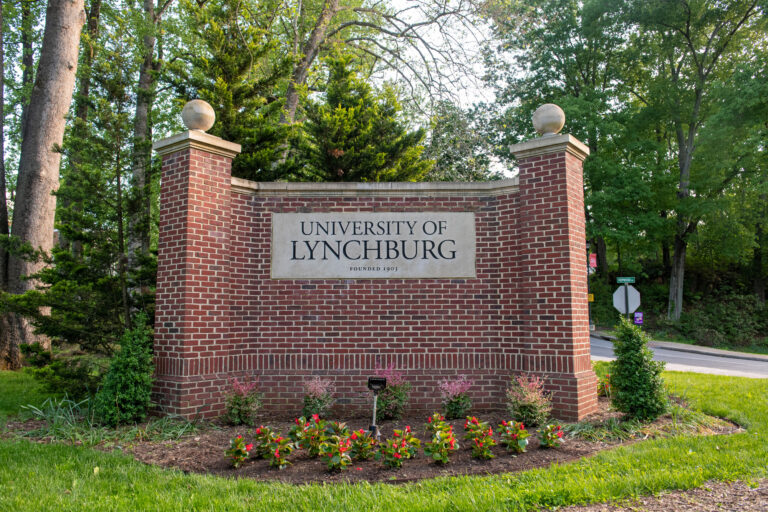
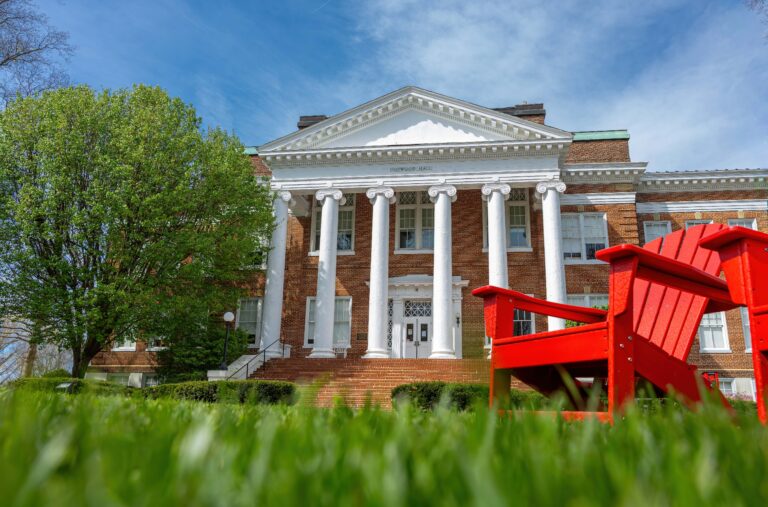
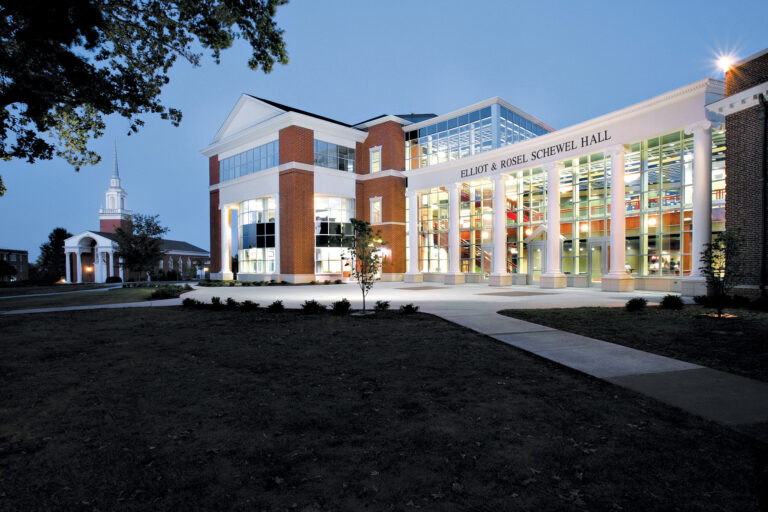
The University of Lynchburg is opening its next chapter on solid ground: fall first-year enrollment is up, the FY26 budget closed with a surplus, and Dr. Sally Selden, the University’s 12th president, has begun her tenure with momentum across academic programs and an ambitious long-term growth plan.
In recent years, University leadership took direct action to realign the institution’s operating budget with changing demographic trends. Those decisions have stabilized the University’s balance sheet while expanding career-focused academic pathways for both undergraduate and graduate students.
Financial audits for the current fiscal year confirm that the University’s operational corrections achieved their intended goals.
The University has returned to positive cash flow, ending multiyear operating deficits with an operational surplus north of $3 million. It earned an audited Composite Financial Index, or CFI, score of 4.35 from independent accounting firm Brown Edwards. The score demonstrates a steady and consistent improvement over the prior two years.
Credit rating agency Standard & Poor’s confirmed the University’s bond rating as BBB and “Stable” two years in a row, and giving to the University increased two years in a row to a multiyear high, as of June 30, 2026.
The University’s endowment is at an all-time high at an estimated $152 million, subject to fund managers’ finalized yearly reconciliation reports.
“We focused on making each operational dollar defend itself,” said Price Jett, chief financial officer. “The steps we’ve been taking over the past two years gave us a balanced budget, positive cash flow, and full compliance with all debt covenant requirements.”
The University’s financial recovery coincides with an increase in first-year student admissions. Lynchburg welcomed 502 incoming undergraduate students this semester, and the University is executing a multiyear recruitment plan designed to grow undergraduate enrollment to 2,032 students by the year 2032.
“Choosing a college is about finding a community that prepares you for life,” said Leah Maturano, associate vice president for enrollment. “Our enrollment growth shows that families recognize the value of a Lynchburg education, where strong liberal arts principles meet practical, career-ready skills within the framework of individualized support and faculty mentorship.”
To give students faster and more affordable paths to graduation, the University continues to innovate its academic offerings and initiatives.
The University of Lynchburg is the first university accredited by The Commission, formerly SACS-COC, approved to offer accelerated bachelor’s degree tracks that allow students to finish their degrees in three years, saving a full year of tuition and living expenses.
Lynchburg’s professional doctorate, with concentrations in Corporate Leadership, Emergency Management and Global Health, Ethics of AI and Technology Leadership, Government and Public Leadership, and Healthcare, prepares a broad range of leaders to impact their industries.
Research-focused leaders deepen their expertise in areas including education, nonprofit leadership, healthcare, and sports administration through the University’s PhD in Leadership Studies program.
Lynchburg’s well-regarded, “small-by-design” graduate counseling program has just been approved by CACREP, the industry’s accrediting body, to offer the program online. This will be a highly personalized, tightly-knit cohort program with the convenience of online study.
Upgraded academic advising processes, supported by both professional and faculty advisors, as well as real-time degree progress tracking in the student portal, MyHive, ensure students meet all graduation requirements on schedule.
A cross-departmental initiative was created to reduce administrative friction, eliminating common campus roadblocks and enhancing customer service to ensure a seamless, supportive student experience from enrollment through graduation.
“Our goal has always been to prioritize the student experience,” Selden said. “We are starting this academic year with a balanced budget, a strong first-year class, and outcomes-driven academic offerings that prepare our students for whatever comes next.”