The University of Lynchburg received a $25,000 grant through a partnership between the Council of Independent Colleges in Virginia and Interfaith America, a Chicago-based nonprofit that seeks to advance the cause of pluralism.
The grant will enable the University to enact several initiatives over the next few years, according to Chief Inclusive Excellence Officer Dr. Robert L. Canida II.
The University’s grant proposal states that pluralism “is not simply the presence of different identities but rather the conscious and deliberate ways in which we interact with, understand, and collaborate across those differences to create a more inclusive and thriving society.”
The proposal goes on to state that Lynchburg’s Muslim and Hindu student population has grown significantly, making “an environment that actively fosters understanding” a necessity.
Canida said Lynchburg was also awarded the grant due to “our president, Dr. Alison Morrison-Shetlar’s leadership and commitment to inclusion and belonging, along with the dedication and vision of the project’s team members.”
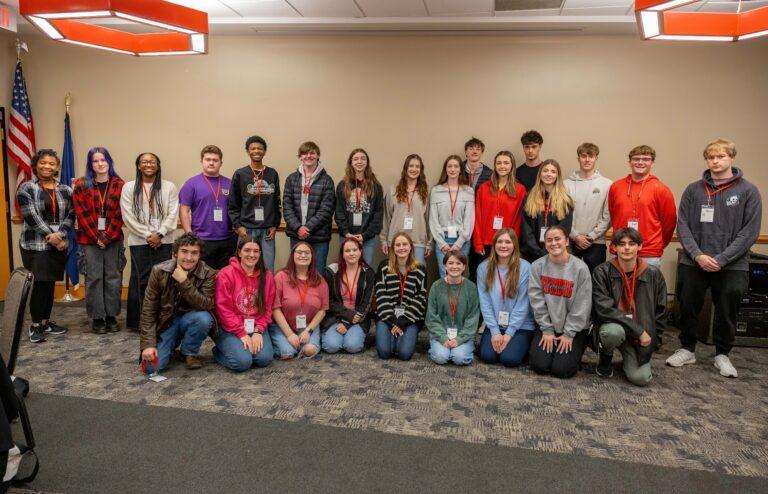
The project team includes the following professors, students, and administrators:
- Dr. Amy Merrill Willis, director of general education and outcomes assessment, professor of religious studies
- Dr. Blake Rogers ’23 DMSc, assistant professor, Doctor of Medical Science program
- Dr. Daniel Hall, chief of staff and organizational strategy
- Jer Bryant ’03, ’10 MA, associate University chaplain, associate professor of English and modern languages
- Davison Chapman ’27, Westover Honors College
- Hayden Deans ’26
- Vivian Miller ’90, ’00 MEd, Lynchburg Alumni Board
- Rev. Dr. Nathan Albert, University chaplain, assistant vice president for belonging
- Dr. Robert L. Canida II, chief inclusive excellence officer, project team chair
“Our two main objectives will be based on capacity building and cocurricular engagement,” Canida said. “The capacity-building pillar will focus on pluralism education in student orientation and … in-depth bridge-building skill development and mentorship opportunities for students, faculty, and staff.
“The cocurricular engagement pillar will focus on student fellowships for pluralism, supported by institutional leadership and ongoing pluralism programming led by students, faculty, and staff.”
The grant will provide students and employees opportunities to attend the Interfaith America Leadership Summit, a National Coalition Building Institute session, and a University of Lynchburg “civic pluralism” summit.
Lynchburg’s summit will involve panel discussions “with an emphasis on building respect,” Canida said.
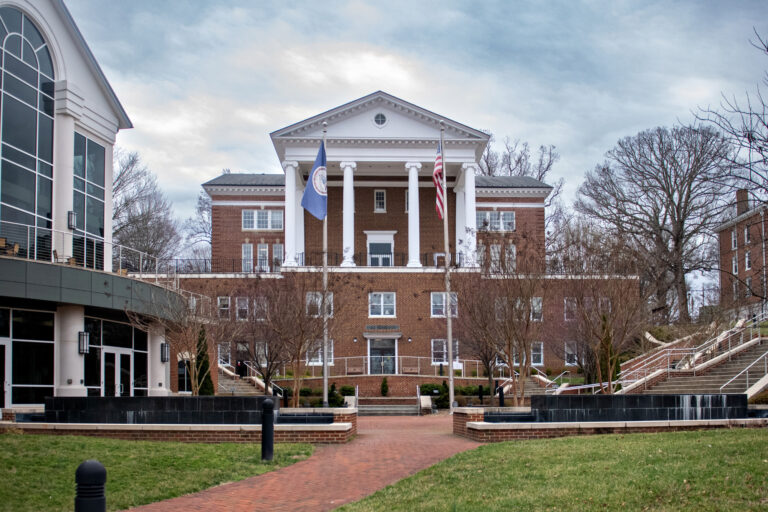
Grant funds will also be used to reconstruct the University’s iconic Friendship Circle into what is described in the proposal as “a vibrant physical space that celebrates pluralism.”
The proposal further states, “This upgraded space, along with other campus locations, will serve as a central hub for cocurricular activities and capacity-building programs [that aim] to instill pluralistic beliefs and values.”
The project team will meet to discuss a development timeframe.
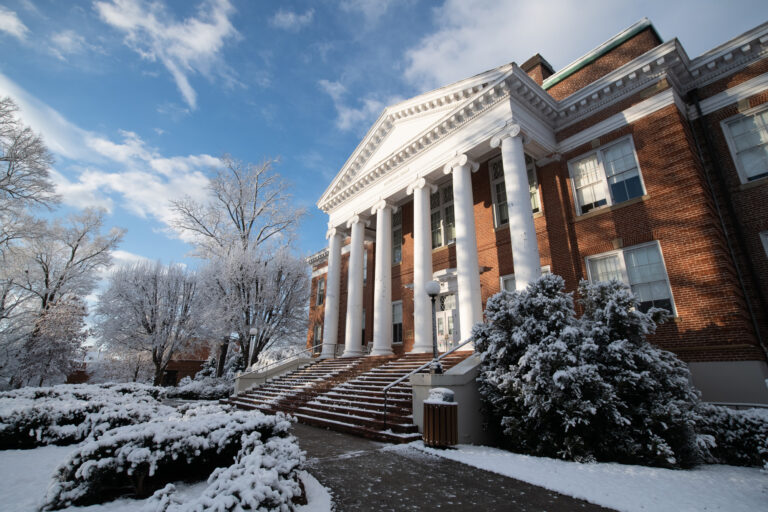
Friendship Circle is located in the middle of the Dell. At its center lies a bronze seal commemorating the University’s partnership with the Virginia Center for Inclusive Communities.
In 1935, local religious leaders and University leadership came together to fight antisemitic and anti-Catholic sentiment through an interfaith conference which was attended by nearly 1,000 people.
This conference distinguished the University as the site of the first Virginia chapter of the National Conference of Christians and Jews. In 1990, Friendship Circle was dedicated to commemorate this event.
“It’s our hope to embed our commitment to pluralism within a physical space at the University as we seek to inspire a commitment to pluralism within the heart of the University’s culture,” said the Rev. Dr. Nathan Albert, University chaplain and assistant vice president for belonging.
Several future projects are also outlined in the grant proposal, including a “Pluralism Center” which would “bring together academics, champion new research, provide educational programs, and feature visiting speakers.”
Canida said receiving the grant “proves that the University of Lynchburg is and will continue doing the right thing for the right reason.
“Creating a sense of belonging and inclusion is doing the right thing! And as a result, our students, staff, and faculty can call Lynchburg home!”