Enrollment in the University of Lynchburg’s criminal forensics major, which was launched this past March, is off to a fast start. According to Dan Murphy, assistant professor of criminology at Lynchburg, 20 students have declared the major so far.
“This year is going to be the real test,” he said, adding that by the time the new major was approved, most students had already selected colleges for the 2025-26 academic year. “The few freshmen we have, they just found out about it by chance.
“One, I met at an open house. That was the reason she came to the school, when she heard about [criminal forensics].”
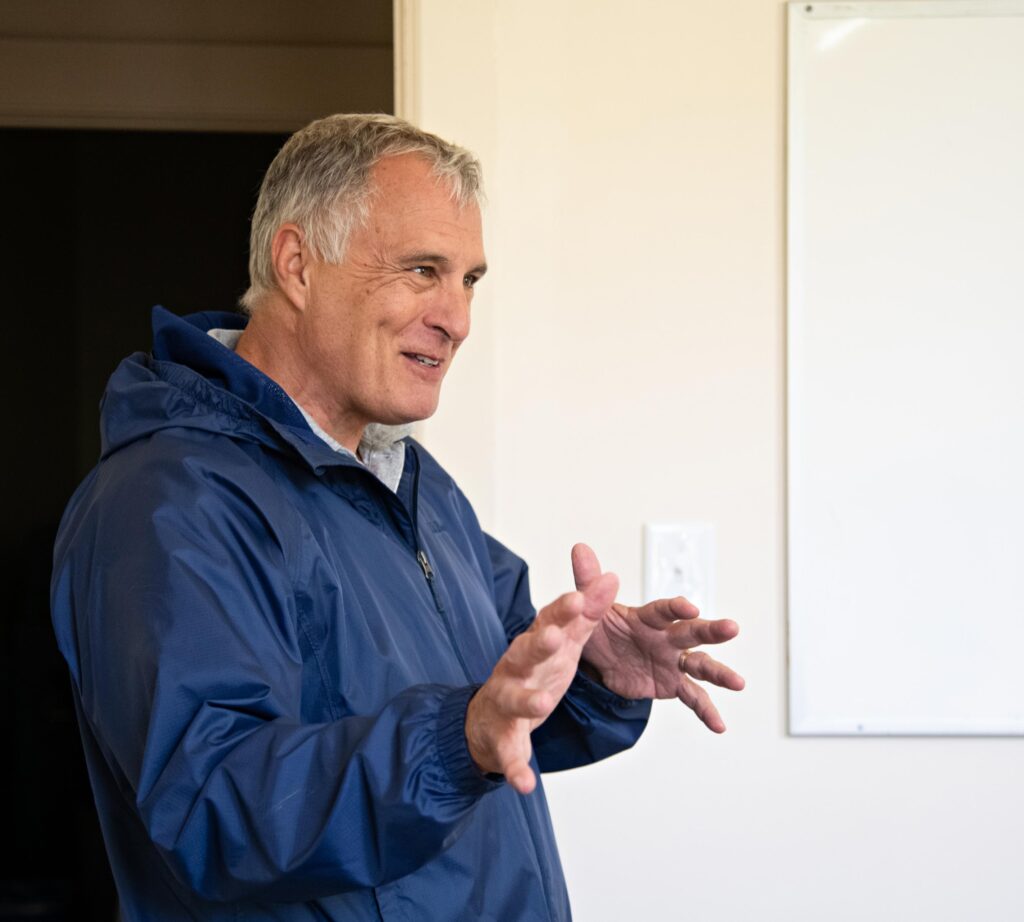
Lynchburg has offered a criminal forensics minor for about 10 years. The University’s criminal forensics major, which Murphy proposed three years ago, might be the only one of its kind in the U.S.
“Criminal forensics is unique,” he said. “When I proposed this, there wasn’t a program that I was aware of anywhere in the country like this.”
Murphy, who was a law enforcement officer for 21 years prior to entering academia, said the criminal forensics major is best paired with a biology, chemistry, or psychology major. Students also can pursue a criminology-criminal forensics double major.
“It’s not designed for people who want to work in a lab because you don’t get in-depth enough in the sciences, but it’s good for people who want to process crime scenes and also for double majors.
“People who work in the lab don’t know how [evidence] gets there in the first place, what happens at the scene before it gets to them. People who process the crime scenes and tag evidence don’t know what happens when it gets [to the lab]. …
“We’re bridging the gap between the crime scene and the sciences. Being a double major, you learn both ends.”
Murphy added that criminal forensics is not the same thing as forensic science, a major offered by numerous colleges and universities.
Forensic science is aimed at people who want to work in a lab environment, he said, while criminal forensics is intended for those who want to process crime scenes — and not just as law enforcement officers.

“There’s a trend going around the country right now, where they’re hiring more and more civilians to process crime scenes, instead of police officers. Most notably, Lynchburg [Police Department] just hired someone.
“You don’t need someone with handcuffs and a gun, [and it’s] more cost-effective, too. A lot of people are into ‘CSI’ and crime scene stuff, but they don’t want to wear a gun like I did.”
Jenna Roach ’26, of Huddleston, Virginia, will be Lynchburg’s first criminal forensics graduate. The double major in criminology and criminal forensics will finish her coursework in the fall of 2026.
Roach said her interest in criminology and criminal forensics stems from “always wanting to know what happened during an event” and a longtime interest in TV shows like “CSI” and “Criminal Minds.” Stories a cousin told her about being a lawyer increased that interest.
Through her classes at Lynchburg, she’s explored all aspects of the criminal investigations career she hopes to have someday.
“I’ve learned the different degree of murders, how to package evidence, different types of child abuse, and the role of police,” she said. “In my CSI class, I was the photographer for our mock crime scene, so I got to take pictures of all the evidence and the ‘dead’ body that was in our scene.
“I also got to experience FBI special agents coming to one of my classes to talk to us and give us information about what they do during their job. I also got to experience multiple officers come and speak about what they really do in their role as an officer and what they have been through.
“The one experience that stood out the most to me is the homicide officer that came and showed us real crime scene photos … and he told us everything they did at the crime scene and how they found the person that did it all.”
Hanna Sosa ’28, a criminal forensics and biology double major, wants to translate her degrees into a career as a medical examiner.
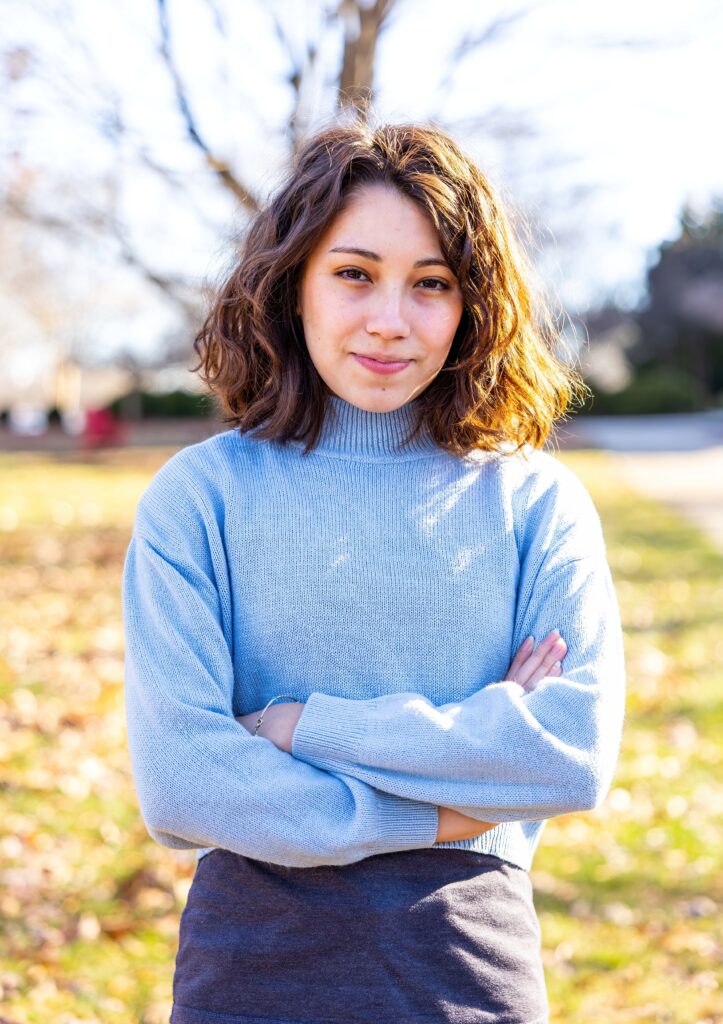
For a long time, Sosa said, she’s had an interest in “seeing bodies from the inside,” an interest she doesn’t consider morbid but is rooted in her curiosity about human beings and their bodies.
“Whether alive or dead, different variations of how they can be seen as healthy or not,” the native of Reynosa, Tamaulipas, Mexico, said. “How they can be seen after a terrible accident, or mentally, what determines their actions, their consciousness, why we are not all mentally the same even if we have the same elements.
“Since my teenage years, I’ve learned to appreciate the different perspectives around me. I consider myself a curious person, and when I learn something that interests me, all I can think about are questions and more questions.
“I feel an urge to know everything. I want to learn things completely. I want to be able to explain why everything is the way it is.”
As she finished high school, Sosa said she was a “little bit nervous” about being able to find a career in a field that interested her.
“So, I started looking at different fields, and that’s how I saw things that interested me — mostly manual work. … I’m very interested in practical work, working with my hands, or doing research. I would like to discover new things, or at least discover new applications [and] explanations.”
Eventually, she determined she was “more interested in criminalistics,” a field defined by Merriam-Webster as the “application of scientific techniques in collecting and analyzing physical evidence in criminal cases.”
As luck would have it, the criminal forensics major launched during her first year at Lynchburg. “After one semester, I was offered the opportunity to consider [it] as a major, and after seeing the prerequisites, I was interested,” she said.