
Tick Protection for Humans and Pets
April 28, 2021 2026-02-03 15:59Tick Protection for Humans and Pets
Tick Protection for Humans and Pets

Please take a couple of minutes to share your experience. Results will be used to better understand tick activity, to create a map showing where ticks are being reported, and to develop outreach and education materials. Please complete one form per tick or tick bite.
Protect Yourself
Tick season is here, and the tick population and the many diseases ticks can carry are growing. To best protect yourself, check yourself often and stick to the center of trails. Wear light-colored clothing, including pants and long sleeves, and tuck your pants into white/light-colored socks. Use an insecticide to spray clothes and shoes outdoors, and allow them to dry. Permethrin, DEET, picaridin, or lemon eucalyptus oil are the most effective. Follow safety directions and do not use these on children under 3 years old. After coming in from a tick-infested area, put your clothes in the dryer for at least 10 minutes. This will kill the ticks. Then take a shower and check yourself both physically and visually.
Check yourself for ticks often! Check your children and pets for ticks often! Ticks love warm places, so check everywhere on your body, including behind your kneecaps, in your groin area, between your legs, your waist area, bellybutton, under your armpits, around your ears, and in your hairline. If you find a tick on your body, it is important to remove it immediately. Many sources state that ticks require a minimum number of hours for a disease to be transmitted; however, there is no known incubation period for alpha-gal, and recent research and patient reports contradict this.
Educate Yourself
Check Yourself for Ticks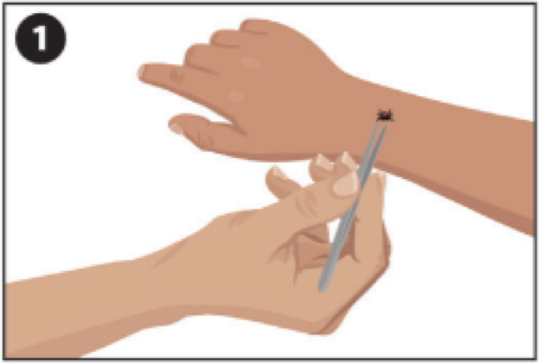

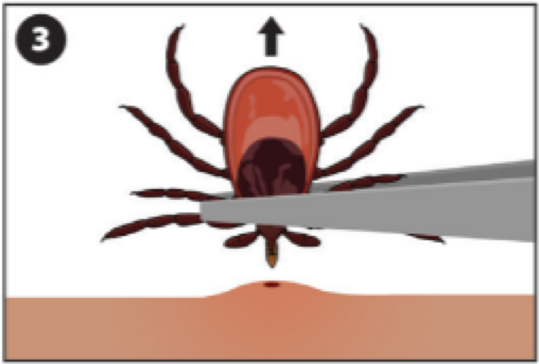
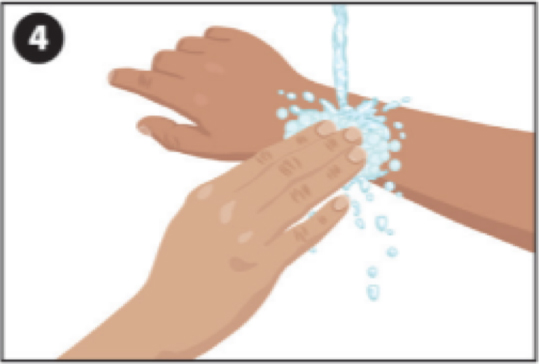
To remove a tick, use a fine-tipped tweezer to pull it straight up, and try to get as close to the skin as possible. Try not to twist the tick. Clean the area with rubbing alcohol or soap and water, and watch for redness, itching, and other symptoms.
If possible, save your tick. Put it in a zip-lock bag and write the date and where on the body you were bitten, and then put it in the freezer. If you experience symptoms, you can submit the tick to Tick Report, a tick-testing laboratory that offers tests for multiple pathogens, including Lyme disease, Rocky Mountain spotted fever, anaplasmosis, ehrlichiosis, babesiosis, Bartonellosis, Powassan virus, and others. These tests are not always 100% accurate, and alpha-gal cannot be detected by them; however, tick tests can be more reliable than human tests.
Early diagnosis is key. Many signs and symptoms overlap with those of more common diseases, so clinicians may miss a diagnosis of a tick-borne disease. Tick-borne diseases are often misdiagnosed and can cause serious, lifelong complications.
Watch for these early signs and symptoms:
- Bull’s-eye rash or other rash (you will not always develop a bull’s-eye rash with Lyme disease).
- Flu-like symptoms.
- Fever or headache.
- Joint pain or swelling.
- Muscle pain.
- Fatigue.
- Excessive diarrhea or other GI symptoms.
- Allergic reactions, such as hives and swollen lips, are especially common after eating mammal meat.
When to See a Doctor
If you start showing any of the signs or symptoms above or other odd symptoms within a few days, weeks, months, or even years after getting bitten, you should see a doctor. You will need to be proactive. Most doctors will not test for a tick-borne illness unless there are symptoms. You will need to inform your doctor of your symptoms and the site of the bite, and request both a tick panel and an alpha-gal blood test. These are separate tests, and you must request both because ticks can transmit multiple diseases and infections. It is not uncommon to have more than one tick-borne disease.
At your appointment
- Tell your doctor you were bitten by a tick and include when and where, if known.
- Ask for a tick panel that includes Rocky Mountain spotted fever (tick panels do not include RMSF unless requested). These tests are not always accurate; if symptoms persist, consider repeating the test.
- Ask for an alpha-gal blood test.
If you are diagnosed with a tick-borne disease, find a doctor who believes in your diagnosis and the long-term complications it can have. Find a doctor who will help you figure out how to manage your symptoms and who will refer you to other doctors who can best help you. Each person responds differently to a tick-borne disease and requires an individualized, holistic treatment plan. Also, find and join a support group. Facebook has a variety of online support groups, including alpha-gal, Lyme Disease & Co-Infections, Survivors of Rocky Mountain Spotted Fever & Lyme, Powassan Virus Awareness, and more. Lymedrc.org also offers virtual support groups for individuals with Lyme disease or other tick-borne illnesses.
If you find a tick or are bitten by a tick, use the tick identification chart from the Virginia Department of Health to see if you can identify it, then share with us (using this form) where you found it.
To learn more about the ticks and tick-borne diseases most prominent in Central Virginia, visit the Virginia Department of Health’s Tick and Tick-borne Diseases Identification in Virginia Fact Sheet.
