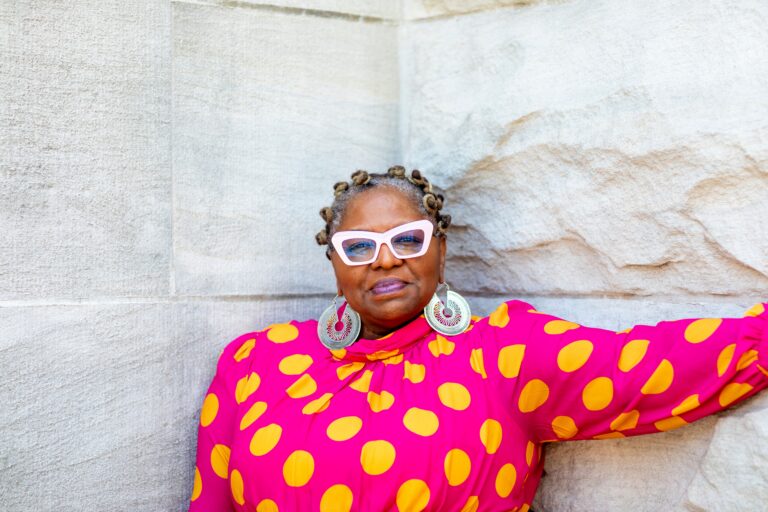
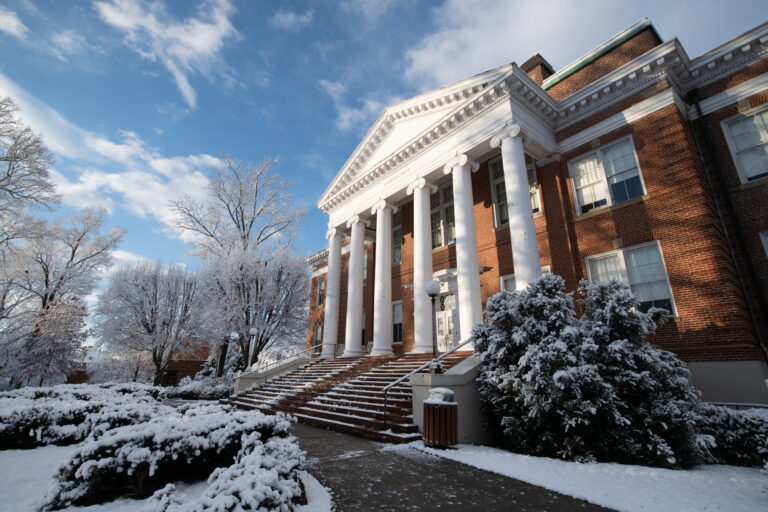
Longtime educator Bill Ferriter will give the annual Rosel Schewel Lecture in Education and Human Diversity at the University of Lynchburg on Thursday, March 12. The event begins at 7 p.m. in Hall Campus Center’s Memorial Ballroom. Admission is free and the public is invited.
In his lecture, “Teaching, Learning, and Human Judgment in an Age of Artificial Intelligence,” Ferriter will discuss how AI can support teaching and learning, including lesson planning, differentiation, assessment ideas, providing feedback, and supporting student learning.
His focus will be on thoughtful, ethical, and creative use of AI.

A classroom teacher for 29 years, Ferriter is the author of “The Big Book of Tools for Collaborative Teams in a Professional Learning Community at Work.”
He has coauthored several books, including “Building a Professional Learning Community at Work,” “Making Teamwork Meaningful,” “Creating a Culture of Feedback,” and “You can Learn: Building Student Ownership, Motivation, and Efficacy with the PLC at Work Process.”
He has bachelor’s and master’s degrees in elementary education from the State University of New York at Geneseo.
Earlier that day, Ferriter will meet with Lynchburg education majors to deepen their own understanding of AI from a learner’s perspective and consider how AI might support or hinder student learning in their own classrooms. The session will be titled “Learning First: Using AI to Grow as a Learner Before Teaching with It.”
“The content is being specifically tailored by Bill to prepare preservice teachers to use AI thoughtfully and effectively in their future classroom practice, so we believe education majors are the best audience for this session,” said Dr. Tim Schauer, dean of Lynchburg’s School of Professional and Applied Sciences.
“In addition, we will invite other education majors to participate as their schedules allow. The session will be held in Schewel 232, which has a capacity of 50, so we anticipate a strong and appropriately sized group.”
Later that afternoon, Ferriter will meet on campus with K-12 educators from local school divisions for another session, “From Curiosity to Classroom Practice: Using AI to Improve Teaching and Learning.” He also will spend time with University faculty and staff.
“The Schewel Lecture Series represents the best of what higher education can offer, bringing together distinguished thought leaders with our students, faculty, and community to engage the critical issues shaping our society,” Schauer said.
“I’m particularly grateful for how these conversations challenge our students to think beyond their disciplines and prepare them for ethical leadership in an increasingly complex world. This year’s lecture continues the Schewel family’s remarkable legacy of enriching our campus and our region through meaningful dialogue and shared learning.”
For more information about the Schewel Lecture Series, email Schauer at [email protected].
The annual Rosel Schewel Lecture in Education and Human Diversity is made possible by an endowment established by the late Elliot Schewel in honor of his late wife, Rosel. Rosel, a faculty member in the School of Education and Human Development from 1973 to 1992, served as a mentor, facilitator, and community leader.
The purpose of the event, which is open to the campus and greater Lynchburg communities, is to help educate citizens and focus discussion on a topic that is important to all Americans.