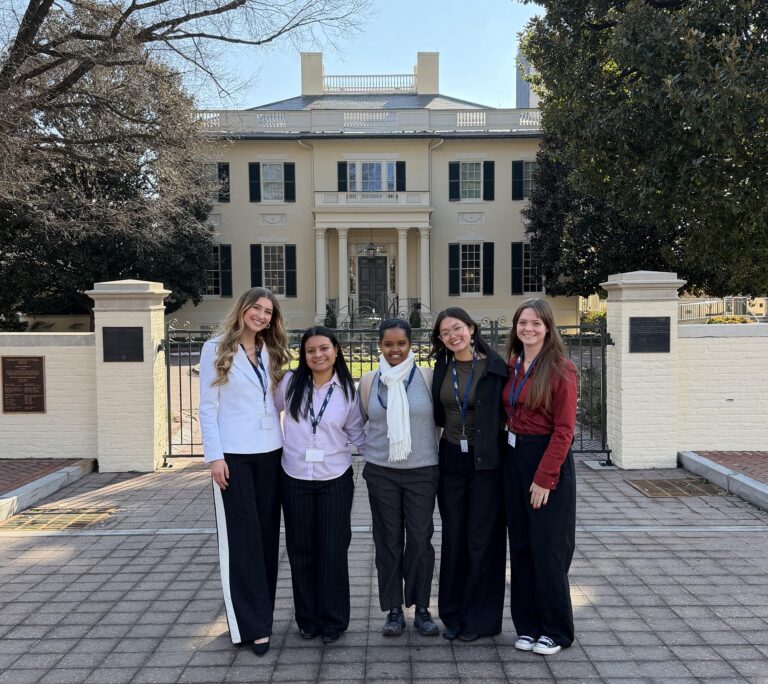
On Feb. 12, Bonner Leaders from the University of Lynchburg and other Virginia colleges and universities gathered in Richmond for Student Day of Action. The event, sponsored by the Virginia Interfaith Center of Public Policy, gave students the opportunity to learn about local politics and meet with state legislators.
It’s the second year that Lynchburg Bonners have attended the event.
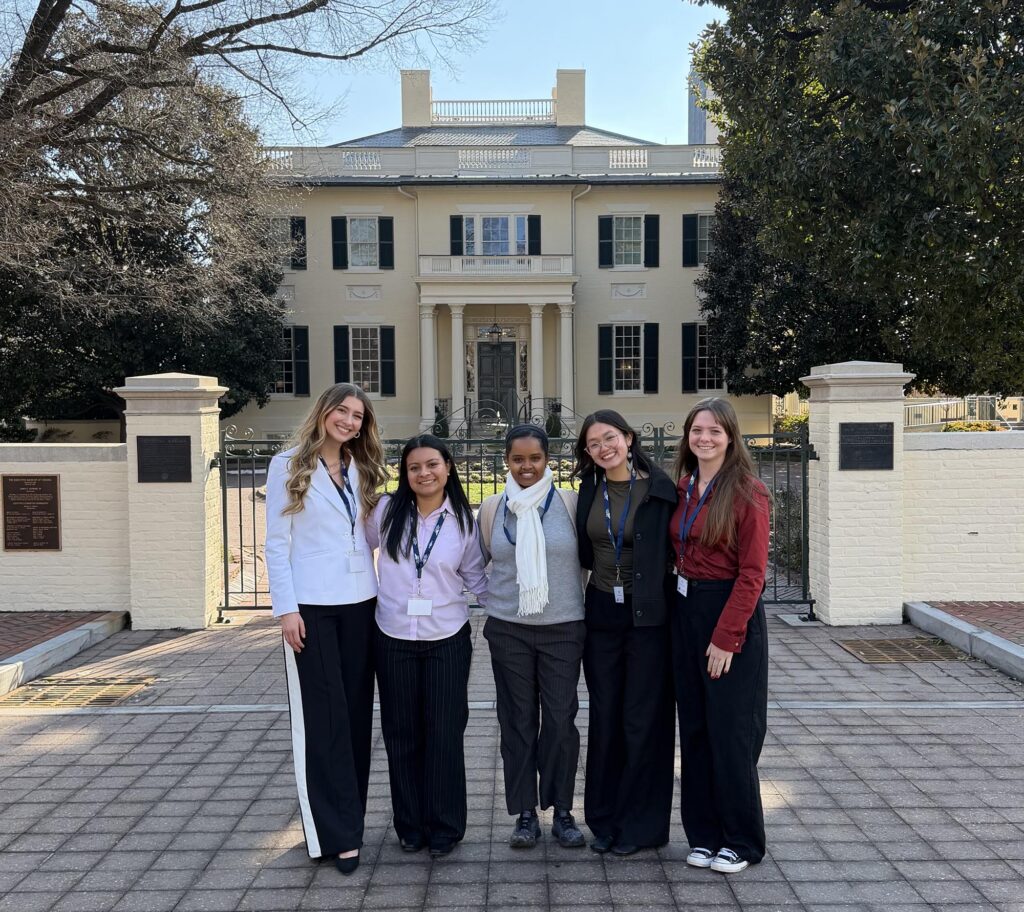
“This is an opportunity to teach college students and young professionals how to engage with the political landscape of Virginia,” Jenny Moran Serrano ’27 said. “The event began by teaching students the skills needed for civic engagement — how to have respectful conversations with legislators and how to discuss complex policy issues.
“Then we traveled to the Virginia General Assembly to meet one-on-one with senators and delegates.”
Moran met with Sen. Mark Peake, who represents the 8th district, and Del. Wendell Walker of the 52nd. “This was a great opportunity for me to practice my advocacy skills and … represent the student population at the Virginia General Assembly,” Moran said.
Susanna Shedd ’27 called Student Day of Action “one of my favorite events I have done in college,” adding that it is an “amazing opportunity to not only advocate for issues you care about, but also learn about new social reform opportunities.
“I advocated for bills such as SB1, which supports a raise in the minimum wage to $15 over the coming years. The event helped me realize that as a student I have a voice and I should use it on behalf of others.”
“Last year, there was a workshop on prison reform and supporting educational opportunities for inmates, so that when their parole is up, they can become productive members of our society,” she said.
“This policy significantly sees reductions in repeated offenses, and the overall message stuck with me until this day.”
Second-Year Exchange
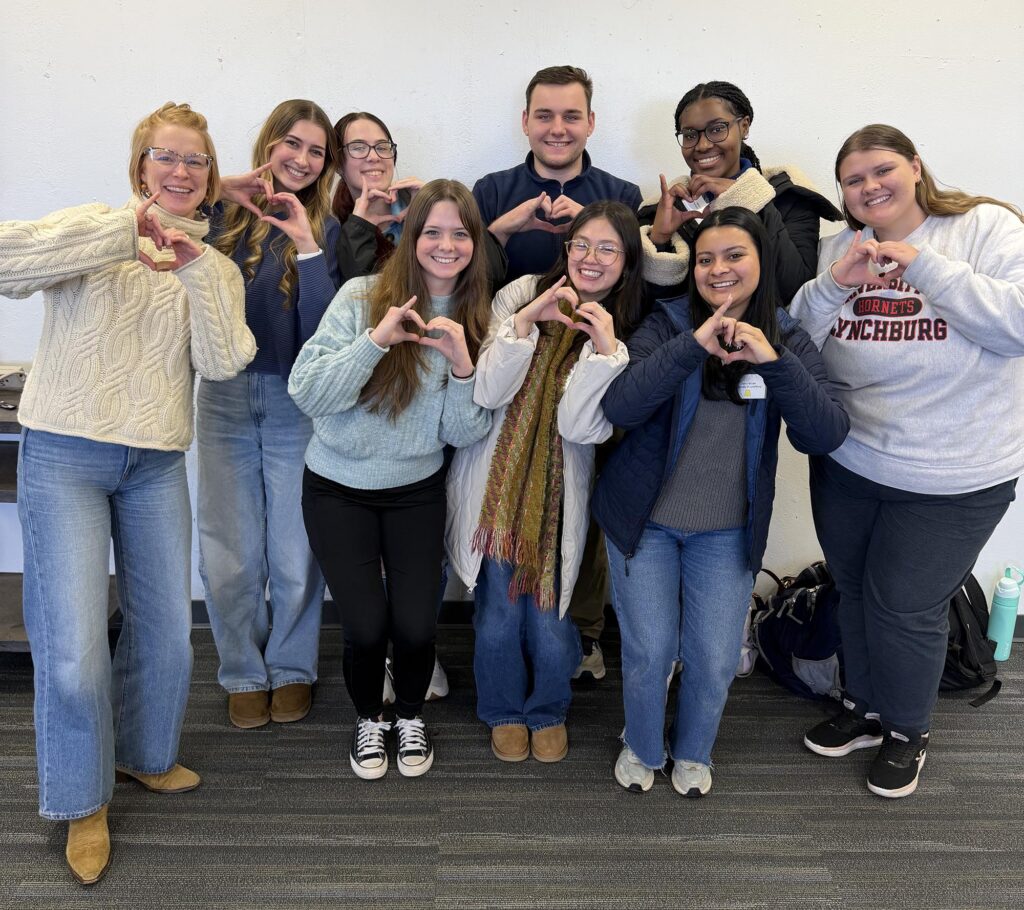
Earlier this month, second-year Bonner Leaders met with their counterparts from other Virginia universities for the annual Second-Year Exchange. The event was held on Feb. 6 and 7 at Eagle Eyrie, a local retreat center.
In addition to eight Lynchburg students, the event involved about 80 total students from the University of Richmond and Emory & Henry, George Mason, and Christopher Newport universities.
During Second-Year Exchange, Bonners in their second year in the program participate in breakout sessions and present research they’ve conducted on four issues: immigration, healthcare, environmental sustainability, and education. The work begins during the fall semester.
“They research an issue in our local community and then interview local nonprofits — local people working with that issue,” said Tasha Gillum, assistant director of service learning and civic engagement.
“They look at other programs that are addressing those issues, successful programs, and look at past policy. They do research around that issue in our community. When they get to Second-Year Exchange, they sit with an issue-area expert and … share their research and the issues in their community.”
The experts facilitate the conversations, Gillum added, and help students frame their ideas as “challenges and opportunities and what that might look like on a policy level.”
This year’s issue-area experts included Ramón Zepeda Ramos, of the Virginia Interfaith Center on Public Policy, in immigration; Cat Atkinson, of Voices for Virginia’s Children, in education; Rob Campbell, of the James River Association, in sustainability; and Hannah Yarosh, of Rush Homes, in healthcare.
Students also had the opportunity to question the panel of experts, Gillum said, allowing them to “explore the intersectionality of all of these issues,” “get multiple perspectives,” and ask questions about experiencing burnout while trying to influence public policy.
“How do you work in this field and sustain yourself when change is slow? … It’s inspiring for a lot of them to have that mentorship and the encouragement and wisdom that comes down from the issue-area experts.”
Shedd and Moran, who participated in the 2025 Second-Year Exchange, helped this year’s sophomores get ready for the event.
“Since Jenny and I attended last year, we were able to guide the second-years along with solidifying their issue areas, conducting research with experts involved in their issue, and even joining two of them in their issue-area group discussions,” Shedd, a biomedical science major and chemistry minor, said.
“I sat in the healthcare issue-area group, and it was really interesting, hearing from students [from] all over the state and their vast array of sub-issues within the main issue of healthcare. The student I was partnered with, Jasmine Waller [’28], discussed the mental and behavioral health opportunities within the Lynchburg community.”
Bonner Intensive
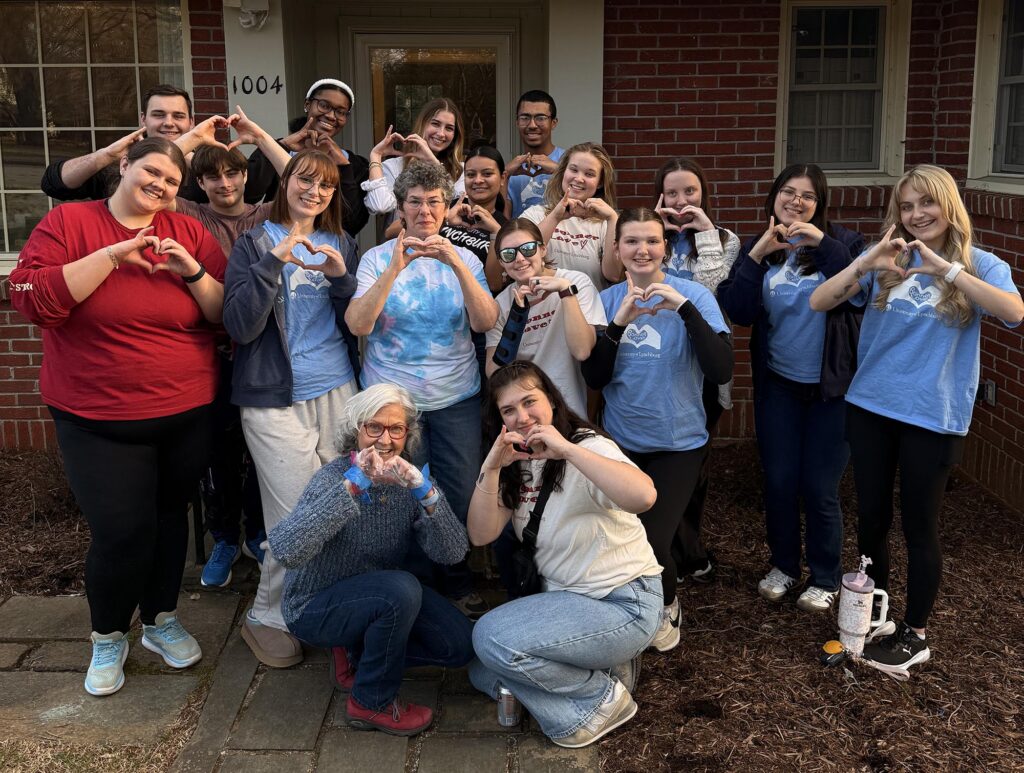
On Feb. 21, Lynchburg did its spring semester Bonner Intensive, when the entire group does service work at one site. “This is really special because most of the time Bonners do individual service throughout the year, but for Intensive we are able to come together and service one organization as a group,” Shedd said.
This year, they helped Trinity Lutheran Church prepare to house spring break service workers. They assembled bunk beds and created what Moran described before the event as “welcoming posters and notes for incoming alternative spring break groups.”
She added, “By doing this, we are making it possible for other volunteer groups to stay in the area and serve the community. As Bonners, we are called to serve others, and opportunities like this matter because we will be preparing a space that will enable other volunteers to come to our city.
“Our few hours of work assembling bunk beds will unlock many more hours of future service.”
Why be a Bonner?
Shedd, whose Bonner service site is the Free Clinic of Central Virginia, hopes to become a neonatal physician. She said she joined Bonner “because I wanted to serve my community, gain clinical experience, and also earn financial assistance along the way.
“What I didn’t expect is actually one of my big takeaways from this entire experience: Bonner has taught me to critically think and approach issues with curiosity rather than judgment. Every social issue has so many layers, and it’s extremely important to approach everything with nuance.
“This skill has made me think more deeply and find common ground with most people. It’s a skill I will be carrying into my professional and personal career, and I have Bonner to thank for that.”
Moran, a counseling psychology major with a minor in human services, plans to pursue a social work career in the nonprofit sector. Her Bonner service site is Miriam’s House, a nonprofit that helps individuals and families who are experiencing homelessness.
Being a Bonner, she said, “took my love for helping others and turned it into a career path in social work. My experience at my service site … has been transformative, allowing me to apply academic theories to real-world scenarios, and I don’t have to wait until I graduate to be able to put my knowledge into practice to make a difference, because I’m doing it right now.”
Asked what she would tell others about joining Bonner Leaders, Moran said, “Bonner has given me more than professional tools; it provides a second family and a sense of belonging that has defined my college career.
“To any student considering Bonner: This program doesn’t just prepare you for the future, it gives you critical-thinking skills to change who you are today. It was the best decision of my college life experience, and it could be yours, too.”